
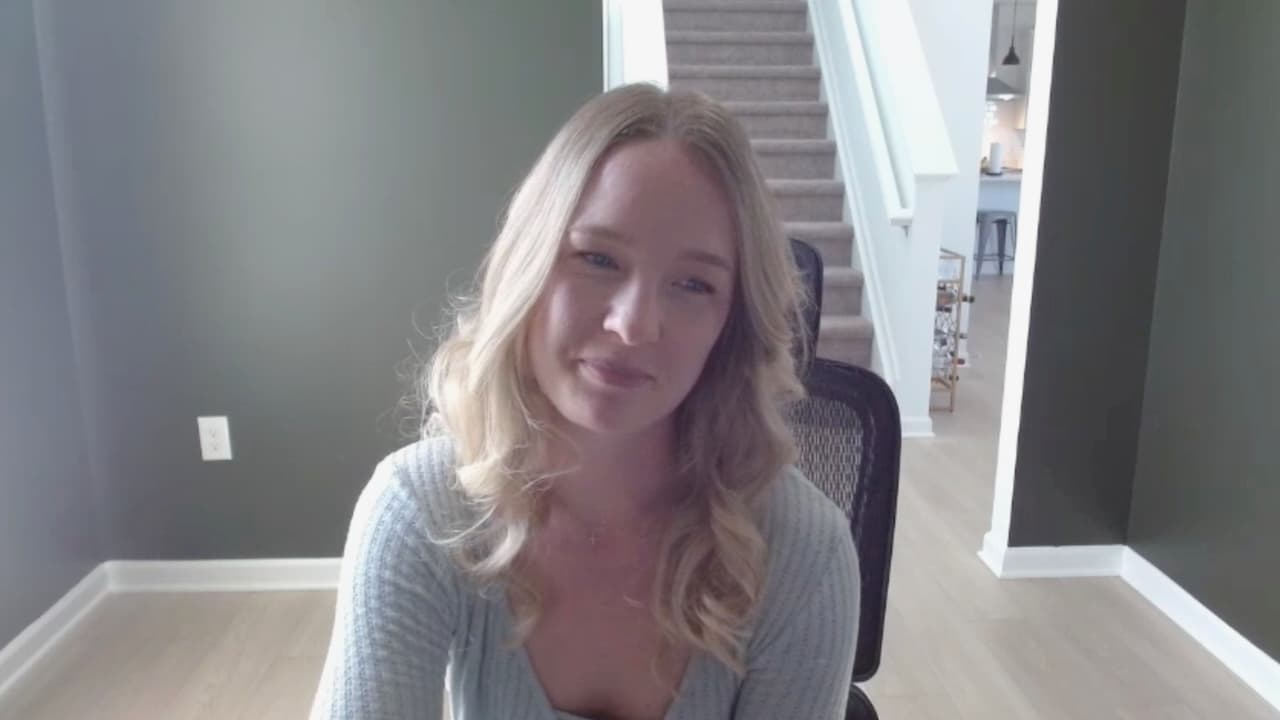
Casaundra’s insomnia first showed up in college. From then on, it would come and go during periods of stress. After getting married, insomnia showed up and this time it didn’t go away. Before long, Casaundra would notice a feeling of anxiety as soon as her head hit the pillow. Nights started to feel like a battle.
In an effort to fix her sleep, Casaundra tried blackout curtains, headphones, melatonin, medication, no screens, less water, strict routines, and even six kiwis before bed. The more she tried to control sleep, the more sleep seemed to control her life.
In this episode, Casaundra shares how things changed when she started making life bigger than insomnia. As sleep got less attention, her evenings opened up. Her days opened up. She reclaimed her identity — and sleep took care of itself.
Subscribe: Apple Podcasts | Spotify | Amazon Music | iHeartRadio | Podchaser | TuneIn
Transcript
Martin: Welcome to the Insomnia Coach Podcast. My name is Martin Reed. I believe that by changing how we respond to insomnia and all the difficult thoughts and feelings that come with it, we can move away from struggling with insomnia and toward living the life we want to live.
Martin: The content of this podcast is provided for informational and educational purposes only. It is not medical advice and is not intended to diagnose, treat, cure, or prevent any disease, disorder, or medical condition. It should never replace any advice given to you by your physician or any other licensed healthcare provider. Insomnia Coach LLC offers coaching services only and does not provide therapy, counseling, medical advice, or medical treatment. The statements and opinions expressed by guests are their own and are not necessarily endorsed by Insomnia Coach LLC. All content is provided “as is” and without warranties, either express or implied.
Martin: Okay, Casaundra, thank you so much for taking the time out of your day to come onto the podcast.
Casaundra: Thank you for having me. I’m super excited.
Martin: Great to have you on. Let’s start right at the beginning as always. When did your sleep problems first begin, and what do you think caused those initial issues with sleep?
Casaundra: Yeah, it’s been a long journey. I feel like, you know, as a kid I slept fine for the most part, but then you get to college and I think my like first bout of insomnia was probably like stress induced, it was like I was TAing for a class, I was training for a marathon. I was trying to keep really high grades and, and doing all these things.
Casaundra: I’m like, I think I was just at the max and like it was just leading to me not being able to sleep because I was about all these things and all these projects and things to do. And so I think the stress kind of built and then that just started this like evolving journey of cycles of insomnia.
Casaundra: So it would like come in different waves. Right. I remember leading my first team at work and. Going into another insomnia cycle. And that was like the first time I ever was put on Trazodone. then, you know, it went away. I think it would kind of ebb and flow, right? Like, oh, I, I would figure it out and it would go back to normal and then it would come back. but I had some really big life changes in like 20 22, 20 23. my, my grandmother who had raised me, had, had died. I had a relationship end that I’ve been in for years. And from all that I was also moving back to my home state, Ohio. And so you cram all of those things into a month and any normal person would probably struggle with sleep, but to me it wasn’t normal. Kind of put me into like this really bad insomnia cycle, right? And so I went back on Trazodone and it was like a year on Trazodone, which is a really long time to be on something like that. Then I finally like, we, we probably can talk more about how that went and what happened in it, but it kind of resolved a little bit.
Casaundra: And then I married and I just went into like the hardest cycle of insomnia. And you know, for me it was like we didn’t live together before marriage. And so like having a person in my bed after I had just gotten my sleep, what felt like back on track was really like stressful to my body, I think. And it just was like, he could sleep anything all night long from like 8:00 PM on. And I was like trying to go to bed with him and like, you know, be married and, you know. Not stay up alone. And it just led to me trying even harder to sleep. And so those are, I think it’s been an ongoing thing, but those are kind of the most recent things.
Martin: So there were these ups and downs. Maybe then you either adapted or you pulled back a little bit and then sleep had the chance to get back on track.
Martin: But it felt like as time went on, when the sleep disruption showed up, it kind of morphed into its own thing. Like it didn’t respond quite as well to the changes that you made, the, the adaptions that you made, the efforts that you made to get things back on track. And then it soon became the main problem rather than all the actual stresses which had once triggered it.
Casaundra: Absolutely. Sleep was like the number one thing on my mind during those times in my life, despite like all the other craziness in my life which just made it even more consuming.
Martin: Was there such a thing as like an average night back then? If there was, what was it like?
Casaundra: When I had that second to last bout of insomnia, where it was after all of those life changes, it was like, that was different because I had just gotten off Trazodone, but I like stopped like. did a hard stop. I didn’t taper, which to anyone listening, please don’t do that.
Casaundra: Talk to your doctor about how to get, you know, taper down on medicine. But it kind of sent me into like, I wasn’t sleeping at all. Like there were two nights straight. I was like, did not sleep. And now I can look back at it and know it was probably the medicine. And there was probably nothing wrong with me outside of the fact that I stopped taking medicine inappropriately without tapering. But that was really hard. And so was really extreme in which the average night was like not sleeping. Where like my most recent bout was when I, you know, just got married and adjusting to living together and sleeping in the same bed. An average night was like, okay, I’m really tired. My husband’s going to bed, and I lay down and immediately just wake up. Right. It was like the adrenaline or the fight or flight. Like as soon as my head hit the pillow, I was immediately stressed and anxious about what that night was going to bring based on everything that I had experienced every night before that.
Martin: Would you find that as the night was approaching you, maybe you were downstairs watch TV or doing whatever you’re doing, and you felt like sleepiness showing up, you felt like really drowsy, really sleepy, and then you went off to bed and then suddenly you felt wide awake.
Casaundra: Yeah, and it was kind of a mix. Like I would be anxious, but I could feel tired, like I knew I was getting sleepy. Mm-hmm. But as soon as I felt sleepy, I got anxious, and as soon as I felt like I could go to bed, I put down my head on the pillow and it was, yeah. Complete anxiety about sleep and stress.
Martin: It was like that problem solving brain just fires up and it starts to predict what the night is gonna bring or it starts to prepare you for the battle or the struggle that experience tells you is about to show up.
Casaundra: Battle is such a good word for that. That is truly how it felt like so many nights.
Martin: Anyone listening to this is gonna be all too aware that insomnia isn’t just a struggle that happens at night, and it also affects the days as well. I’m curious to hear from you when you found yourself in this struggle, what, what were the days like for you at that time?
Casaundra: I think the biggest issue for me during the days was actually like the anxiety and like consuming thoughts around sleep. So for me, I like, I think I was like in such a high fight or flight and like high adrenaline mode that I didn’t feel tired, like I felt wound up despite not even, you know, consuming a ton of caffeine or doing anything crazy.
Casaundra: I felt on edge all day and like I kind of looked at it like a blessing, like, thank God I can get through my days, but my mind was constantly consumed with researching sleep. What else could I do? What are people, what’s the new fad for getting to sleep and how could I adjust to make sure that I could go to sleep that night?
Martin: A phrase associated with people struggling with insomnia is tired but wired. So it’s like you feel a real sense of tiredness or fatigue during the day, but at the same time you’re, you’re just completely wired, really alert. And like you shared, it can help get you through the day and in other ways it can also work against you perhaps if you kind of harness that energy to engage in ongoing problem solving and research, which is completely understandable ’cause you’ve identified a problem that you want to fix. But as we’ll probably explore a little bit more as the conversation progresses, it ends up consuming your attention and the focus of your day is no longer on doing the stuff that matters.
Martin: It becomes on fixing this problem.
Casaundra: And that’s exactly what happened to me. So it started with just those consuming thoughts, but then it completely changed what my evenings looked like and what I did and how I prepared to do all those things that I was researching.
Martin: So connected to that. Moving on from that, what kind of things did you try in an attempt to get sleep back on track to deal with all these thoughts and these feelings that were showing up?
Casaundra: I really feel like I did everything, and I’m sure you know, someone said something different, but I truly felt like anything that I read or someone told me, I was like. Open to try anything. Like I was so desperate that I would do anything to get my sleep back on track. And so it started with like environmental changes, right? The blackout curtains. Very expensive noise canceling like headphones for sleep because I lived in an apartment and I swore, well, like if something, just like, if I couldn’t hear anything and nothing could wake me up, then for sure I would sleep. And you know, it started with melatonin, but I had been on Trazodone before and eventually after that, those like sleepless, like absolutely sleepless nights, it led to Ambien after going to a sleep doctor and specialist. And oh my gosh. I feel like one of my coworkers was like, Casaundra, have you ever tried Kiwis? Like my boyfriend, he eats Kiwis before bed, like six Kiwis, and makes him go right to sleep. I’m like, oh my gosh. Kiwis must be magical. No. It turns out they just have like, they, you know, help you produce melatonin. And after I knew that, I’m like, I shouldn’t even waste my time because melatonin does nothing for me. But there was like several nights I ate six Kiwis every night. I have not had a Kiwi since. I, I’ve tried different foods, not eating before bed, phones for like, no phone, tv, anything screen related for like three hours before bed. It was to the point where I literally would stop drinking water at 6, 6 30 so that I wouldn’t have to get up to use the restroom during the night because I swore that was keeping me up. Right. If I didn’t have any more water, then I would, you know, not struggle to go to sleep. And then, you know, I was. also impacted my social life, right? I had a bible study that we would meet on Wednesdays starting at seven, which even now, like even after all of this, I don’t love late plans, but I really got anxious about anything starting at seven because that’s when my nighttime routine needed to start. That’s when I needed to like settle and not be excited.
Casaundra: So the fact that I went and get home until 10 and showered and ready for bed until 11 was really stressful for me. So yeah, if, if you can name it, I tried it and you know, in that first bout where I wasn’t sleeping at all, I did like a CBT-I app. But it kind of missed the mark on the control piece or like how you’re thinking about it. Like they obviously had some pieces of that, but it was just still felt more like controlling you know, just knowing that sleep will eventually come and the more I try to control it, the less it’s going to work.
Martin: There’s something, all of those things that you just share with us, they all have something in common, right? And it’s just this understandable attempt to control sleep to make a certain amount or a certain type of sleep happen. And that completely makes sense because you identified sleep as a problem.
Martin: You are a problem solver. You wanted to fix it. So you put effort into trying to fix it. And where it sounds like you noticed you were getting stuck was no matter what you were trying, no matter what you were doing, it just wasn’t having the desired result. So that just led you to doing more, doing more, trying harder, trying harder, and your actions just became dominated by serving sleep rather than serve you and the life you want to live. So not only did you find the actions were creating more struggle, they were also kind of pulling you away from who you are and who you wanted to be and the life you wanted to live.
Casaundra: Absolutely. I felt like a different person even, and especially that being like the first year that I was, or like first few months of being married, like I’m sure my husband was like, Who did I marry? Because everything we did, everything I ate, everything was about how could I sleep? And, you know, he slept like a rock. And I know it’s this cruel thing that, you know, all of us just marry someone that, you know, can sleep when we can’t sleep. he would, you know, be sleeping in bed and he’s the type of person that nothing bothers him. He could be woken up and go right back to bed. And so, like there were nights where I would just wake him up, just sobbing, right?
Casaundra: Just absolutely sobbing and so frustrated and so angry, like so, so angry that I couldn’t sleep and he would just scratch my back and, you know, try and help me get back to sleep. And, and two minutes later he’d be asleep and I would still be awake. And it was just all consuming my whole personality. My whole church group knew about it.
Casaundra: Like I was just the insomniac.
Martin: It’s like it takes over your identity, your sense of self, who you are.
Casaundra: Absolutely.
Martin: I’m, I’m curious to know, did you ever ask your husband at that time, like what he did, like what his secret was to just sleeping in the way he did?
Casaundra: You know, I, I never really asked him then because it was just like, he just went to sleep. Like no matter what, he would just, you know, be on his phone, do whatever, and he just went to sleep. But now, like, after your course, someone’s like talking to me about sleep or telling me to try something, you know, if we’re talking about my history with insomnia, and I’ll be like, well, like, you know, you sleep well.
Casaundra: Like, what do you do? Sleep? So I didn’t ask him, but now I ask people that all the time when they’re like recommending something, because a lot of times they’re like, oh, I don’t do anything. I just, you know, go to sleep. And so. But it was something like, through your course, I, I realized so much. I’m like, oh my gosh, the kid’s doing nothing and it just comes to him and he’s not a kid.
Casaundra: He’s a six seven grown man. But yeah, it was infuriating, also hopeful. Like I knew if he could sleep doing nothing and I could sleep. just wasn’t, which really made me feel like something was wrong with me for the longest time until I worked through a lot of things in this course.
Martin: That’s the insight right there, isn’t it? If we do know someone who is a fantastic sleeper. When we’re struggling with insomnia, it often tends to be a, a bed partner or a, or a spouse if we’re in that situation, and you just kind of get a, a blank look when you ask someone who doesn’t struggle with sleep, like what they do to make that sleep happen, because the answer is they don’t do anything.
Martin: And that can reveal opportunity and a new way forward if we feel like what we’re doing at the current time is keeping us stuck or not working for us.
Martin: I think you touched upon it a little bit earlier, but I’m curious to know, you know, as you were doing all this problem solving and trying all these different things to get your sleep back on track, especially these things that you, you know, read about online that is shared with such confidence that this is the thing that will fix your sleep. When you tried those things and it just wasn’t working for you, what was that experience like?
Casaundra: For me it was really difficult because I’ve always been like happy and you know, optimistic and able to look at things like with a glass like half full. with sleep, it was the first time I had some of those really dark thoughts. Like I felt not only alone, but hopeless, but also like. A different length, like level of anger that I’d never felt before.
Casaundra: But part of that like came to a head and like literally wishing I was in the hospital or wishing something so bad would happen to me that I had to go to the hospital to be like put to sleep. And, you know, it’s amazing what a lack of sleep and all this trying and all these things that you’re doing when they don’t work make you feel when you can’t get to the result that you’re wanting.
Casaundra: Like I had never been more desperate in my life. And, you know, as someone who loves your life and, and wants to live it to the fullest and was really scary to have those thoughts of, well, if I could just put an end to this whole not sleeping thing. And that was really eye-opening too for me. Like, I was like, wow, like I, I need some help and I need a way out of here.
Martin: It is really difficult and it’s. It’s not just about the problem of sleep, not happening as you want it to. It’s about all the stuff that gets added on top. You know, all the, all the trying to fix the problem and that, that repeated experience of, I’m trying this, this isn’t working, I’m trying this, this isn’t working.
Martin: You can just feel as though you’re completely out of options and that there’s no way out. It feels just, it just feels like you’re trapped.
Casaundra: Absolutely. And everything else in my life, I’ve been able to work hard enough, right? hard enough at school, get the scholarship, work hard enough at X, Y, Z, like get the promotion, like in life. So many things in life, like you’re able to control that way. And it was really hard for me for this to be. Something I couldn’t control. So it was, it was a lot of growth there for me as well, which I’m sure we can talk about later in terms of just kind of this being a process in which learning that control isn’t the best option in every situation.
Martin: Since you had already tried so much at this point, when you came across my website or my work, what made you think that there was something different here or something worth trying?
Casaundra: I can remember finding your podcast on Spotify. Like any person, like struggling to sleep. I was like, let’s get a puppy. And so, you know, I had a puppy. I wasn’t sleeping even more because of the puppy, and I was taking him on a walk and was just searching on Spotify for insomnia, you know, solutions.
Casaundra: And I, I found your podcast and I had already done the other like CBT-I app before this. And so I kind of recognized some of the things that you were talking about within that. But then there was this like resounding piece that everyone who shared their stories was sharing and it was this like relinquish of control. Like it doesn’t have as much weight on my life. And that felt really like encouraging and like hopeful because it was consuming so much of my life that I’m like, this seems different.
Martin: First of all, it felt different, but it was also in that context of, here are people talking about my experience, they’re describing the kind of things that I am going through, that I’m struggling with. So if this is something that these people found useful, maybe it’s something I’ll find useful too.
Casaundra: Yeah, and it was like, oh my gosh, like I felt like I found like the Disneyland of people who struggle with insomnia, and it was like the first time I saw heard actual stories of people working through insomnia that. It sounded so much like myself, right? And you find like certain episodes and you’re like, wow, this person’s so much like me and like my story.
Casaundra: And on those bad days I would just like replay it, right? And now to this day, you know, it’s amazing how quickly you forget. But I can’t remember the name of that podcast, but I remember the hope that it gave me on my really hard days that there was a way out and people just like me found that.
Martin: What showed up for you when you identified this theme of relinquishing control? Because after all, you were so invested in trying to fix this problem, and now you’re hearing, well, maybe the way to fix it is to give up this control. Like what did that feel like as, as an option or as a suggested way forward?
Casaundra: You know, it was actually so hard, like as the person that’s used control, not in a negative way, but just in a, hey, in our circle of control in our lives, we can get to places we’ve never been, accomplish things we’ve never done, escape generational cycles, and I had done all that, right? And so for me, this idea that if I just stopped controlling it kind of scary, right?
Casaundra: Like it, it was just born to the brain for me at least, right? It was something I’d always, I just always worked hard and if I, I work hard, it, it, it gets the result that I need. But then there was the second piece of it, right? So the first piece was like a shift from how I usually think. the second piece was, what does that actually mean?
Casaundra: Like, I think part of me was kind of like angry, like, okay, like. Just stop trying to control it. Sounds really easy, except when you consider the human brain and how we focus on things that are important to us and, and how we want to improve it naturally without even realizing it when it’s negatively impacting us or how our body wants to protect us, right?
Casaundra: So this thought of, oh, I’ll just stop controlling it frustrating because I’m like, but how, do I control, how do I stop, you know, controlling this or trying to control? So a lot of mixed emotions.
Martin: The two big ones being hope and fear at the same time. You raise a really good point. How do I do this? Like, how do I put this into action? How do I relinquish control? What do I do instead? Because I have to do something. I can’t just do nothing. So I’m curious to hear from you what kind of things you did to put this whole idea of relinquishing control or moving away from resistance.
Martin: How did you put that into action?
Casaundra: It takes a long time, right? And that’s something like even by the end of your course, I wasn’t like, healed, right? It was like I wanted to be, heck, week one. I wanted to be. But it’s just not how it works because I just had to keep doing little things each week to make my life outside of sleep bigger than the sleep issue. And so like, that’s what it started to feel like to actually stop trying to control it, was to build up my life outside of sleep so that it just got less attention. And by giving it less attention, it got less control and sleep could kind of move in. And so, know, a few things, you know, mindset was huge, right?
Casaundra: Just realizing and hearing and seeing the facts about like, I’m not gonna die because I’m not sleeping like I will survive. Like, that was a big one for me. Like, just hearing that and knowing like, I’m gonna be okay. Like all of these, you know, statistics that I’m seeing like does not mean that I am not going to be well, and plenty of people live long healthy lives without, you know, eight, nine hours of sleep.
Casaundra: And so that was part of the mindset, like realizing it wasn’t going to hurt me and so I, I didn’t need to fix it. realizing I could just. Go about my days, right? Like I didn’t need to think about it like sleep was going to come. That that simple sentence of our bodies are going to sleep when they need to provided so much rest for me it, I no longer was like, I’m not going to sleep. I’m like, well maybe it’s not tonight, but it will, it will come eventually. Like I can’t this up forever and so it will come. And so those were a few things or a couple things that stuck out to me in like the mindset shift and then you get into like what actions, right?
Casaundra: So the mindset kind of made room for new actions to come into play for me which sounds like trying to sleep, but it was like all actions to actually stop trying to force sleep. Like, so the first one I think that gets introduced is the sleep window, right? And this was like life changing for me, right?
Casaundra: And I had done sleep for, I just, I hadn’t had that mindset shift, so it didn’t mean anything, you know? And so you can first have that mindset shift, then these things can come in and actually be effective. And so the sleep window, like I remember the first night was like excited, right? Like I was like, I have so much time to get stuff done.
Casaundra: Like I’m a maximizer, right? And that goes into the problem solving all this stuff. And so the idea that, you know, I could cook and clean and do a hobby and take my dog Teddy on a walk, and I could just keep doing all these things until like 9:00 PM because I didn’t need to start a bedtime routine at like 6 30, 7, whatever time it was that night. so. That sleep window gave me more time in my day and I felt like, wow, like this is exciting. And, you know, started doing more yoga in the evenings afterwards and I had more time for my Bible study reading and shows if I, you know, wanted to stay up and watch it. ’cause I was actually allowed to, like, there were no rules, like everything before was, you can’t do this and don’t spend any time in your bedroom.
Casaundra: Like, I loved my bedroom. Like, it was so aesthetic and pretty, and I would never spend any time in it because of all these rules I had in place around the, you know, they say like, the bedroom can only be for three things. And that’s like, you know, sleep, we can all use our imagination on the second one and then sickness, right?
Casaundra: And so now I could just hang out in my bedroom. I could sit on my bed, I could watch a show if I wanted to, if I was really like just really needing to rest because other people did that, right? Like my husband could literally be on his phone, watch a horror film, like the craziest things before bed, and then like fall asleep. So like I could now, I had permission to do that. so the first action was kind of that sleep window, right? And it gave me a lot of freedom and just like time and what I could do and when I could do it. And also just, I wasn’t spending three hours trying to go to bed. Like part of the thing with getting married to my husband is that he likes to go to bed early, which I do too, but like he is an extreme degree of like. Eight 30, he can get in bed. And for most of us, that’s not good. And if we still to this day, like he’ll be like, I’m so tired, I’m gonna go to bed. I’m like, I’m gonna read because I am not tired yet. And I know that if I try to go to bed before I’m even naturally sleepy, like it’s probably not gonna be a good thing for me, even though I don’t say I struggle with insomnia anymore. So that was kind of all things into the sleep window. And then, you know, I dropped all the behavioral and environmental things.
Casaundra: Okay. I have, I lied a little bit. I still like use the earplugs, but only because now it’s just like a comfort thing. I don’t feel like I need them. If I forget them, it’s no big deal. It’s just like. I kind of imagine like a kid with a stuffed animal, it’s just like, oh. It’s like, okay, bed. so it’s like there’s no attachment to needing those, but I don’t take melatonin. Or I didn’t then. Right. It’s part of the change of knowing it wasn’t helping. Don’t take any of the harder, like Ambien that I was prescribed, and I just, I don’t have to eat six Kiwis and that’s really nice. So a lot of things have kind of let up on the behavioral and environmental changes and I can hang out with my friends, like, what a blessing in life. And so that’s kind of the environmental, behavioral and then you get to just like, well, everything wasn’t just fixed, right? And so what happens when I’m still awake at night and I can’t sleep even after that wake window ends and I’m allowed to, you know, go to bed. And there came in like. The just experiencing being awake. And so I, I took pieces from everything, right? I would go back to the mindset of sleep’s eventually going to come, I could use any of those, you know, tools or hobbies that I used to kind of relax during my sleep, like before my sleep window started. So I could do that if I wasn’t sleeping. But I could also just let the thoughts be and thank them for being there without them being so infuriating, right? I was no longer angry about being awake. I could just be awake. And I, I think one of my favorite things too, from the course was like, so much freedom in how you do these things. Like you would say, Hey, you can stay in bed if that’s comfortable still. And I love that because I hate getting outta bed when I am cold or it’s like. I don’t know. I just love being cozy in bed. So like the permission to just staying in bed as long as that’s still serving me mm-hmm. Really went a long way.
Casaundra: So those were a few of the things. I think there were definitely other things but those are some of the big things that impacted my recovery.
Martin: Something that really stood out for you. I think one of the first things you said was, which kind of encompassed everything that you shared, I started to make my life bigger than sleep. Those actions that we were talking about earlier, that when they’re so focused on serving sleep, serving insomnia, you took them back.
Martin: Those actions started to once again serve you. So you were, you know, reading more, you were doing yoga, watching tv, doing your Bible studies. The sleep window helped with that because it was one of those actions that moved you away from the chasing after sleep. You recognized that the amount of time you were allotting for sleep each night wasn’t really serving you.
Martin: It was kind of setting you up for long periods of being awake in bed during the night. So by compressing that down and more closely matching it with the amount of sleep you’re currently getting, there was more opportunity for you to do these things that mattered. It opened up all this additional time that you had available to do things that served you and the life you wanted to live, and that in turn helped reduce the influence of sleep in your life.
Martin: It was still there, like sleep or insomnia was still there, but now it was one of many things rather than the only thing. And like you touched upon that didn’t mean that suddenly there was this miraculous transformation and that sleep was happening exactly as you wanted it to, or the, all these difficult thoughts, difficult feelings, stopped showing up.
Martin: But it’s got you started on this new way forward where you were reclaiming your life, where life was becoming bigger and opening up again. And I’m curious to hear a little bit more about how you were addressing all the thoughts and the feelings that show up at night. You know, especially when sleep isn’t happening as you want it to happen.
Martin: You said that something changed there, where you kind of gave permission for those thoughts to exist. You even thanked them for showing up and that in turn kind of reduced how they were affecting you.
Martin: What would you say to someone that might be sitting here listening to this thinking I can’t possibly open up or accept those things ’cause they’re really difficult. And it’s just the idea of opening up to them in itself is really scary.
Casaundra: It is really scary, right? Because you’re like, I have fought this so hard, like, why would I, and, you know, invite them in. But it, it takes the power away, right? And, and they can’t hurt you, right? The more you let them in, the less they actually hold over you. I, I, I remember my thoughts would just kind of swirl and ruminate and, and keep going, but when I would actually like. Let them in and observe them and see what they were telling me, which is that sleep is important. And of course I have important things coming up in my life. Or you know, I wanna sleep for a certain reason. Telling me all these things were important to me. I could just thank them because I was like, yes, this is important.
Casaundra: Thank you for showing me that. It is important, but I’m gonna let you go now. Right. And I, I don’t remember if it was part of the course or, and I think it probably was, but I would just like imagine them like going out the window, right? Like the breeze would kind of pull them out the window. And I think maybe some people would do like, you know, flowing down water or something. And just that visual, even though it sounds really silly, helped me to just kind of watch them go, right? I let them come in, I let them stay. We had a good talk, but now they could go and they might come right back. Sometimes they just like come around the window and start knocking on the door. And you’re allowed to just do the same thing. I found like if I didn’t let them in, it actually made it worse. And I actually just kept ruminating over what I thought it was going to be. And this has helped me in like other areas of my life too, right? I can sometimes be anxious about, you know, driving on the highway, right? And what if something bad happens to me?
Casaundra: And just like recognizing, well, okay, that’s a really small chance that would happen, and what’s the worst thing that could happen, right? I go to be with Jesus and my family’s taken care of because all the things I’ve put in place, okay, that’s actually not that bad, right? And so it’s helped me in other ways too, of like not just insomnia, knowing, oh yeah, I’m gonna be fine tomorrow.
Casaundra: Like no matter how tonight goes, I’m going to be fine. I’m gonna do all the things that I need to do no matter what.
Martin: It sounds like you found it helpful to recognize that your brain wasn’t working against you. That all these thoughts and these feelings that were showing up, many of which can be really difficult to experience, don’t come from your brain working against you. It comes from your brain, like reminding you of what’s important, reminding you of what matters, looking out for you.
Martin: And that in itself just acknowledge being aware of that, that my brain isn’t an adversary can help support you in responding differently with less resistance.
Casaundra: Oh yeah. Even like to this day, you know, if I have a rough night or I’m just not sleeping as easy as sometimes I do. It’s like, oh yeah, like I’m, I was so excited about this new podcast I found, or something at work that’s happening, and so it’s like, oh yeah, like I’m excited or I’m stressed. Like this makes total sense. And you’re like, okay, yeah, maybe I don’t sleep the best at tonight, but it’s just because of X, Y, Z, not because I’m broken, not because I need to change anything or I can’t sleep. None of that’s true. It’s just the things that are now filling up my life.
Martin: The approach that you took that you found helpful, which, which to summarize, it sounds like it was, first of all, just kind of acknowledging what your brain was telling you. Maybe thanking it for looking out for you, then being more of an observer of whatever these thoughts and these feelings were.
Martin: You shared that as you did that it kind of lifted the weight of them a little bit, but you did notice that sometimes they would drift off, but then sometimes they would also come back. How did you respond to that experience of them coming back? Because I think often what can happen is when we practice this new approach of opening up, reducing our resistance, and we notice, wow, these thoughts, these feelings are losing their power.
Martin: They’re losing their influence. Oh, they’re disappearing. When they come back, suddenly it can feel like uhoh, the brain goes into alert. This is another one of those things that’s not working. Now we have to do something different. I’m just curious to hear what your experience was like with that and how you responded.
Casaundra: Yeah, I would love to say that every time I came back, I just did it all again and it worked just fine. The reality is sometimes they come back and it’s, it’s even more scary, right? Because there’s a part of insomnia that when little pieces that remind you of it come back into your life or a thought comes back up and it’s not easy. It’s like scary, right? Like you’re like, is tonight gonna be that night? Or is, you know, you start. Can start having negative thoughts about it. And so that did happen sometimes, right?
Casaundra: I didn’t spend as much time in that really dark place. Right. Which was a really scary place for me. Remember, because it’s not who I am. I was so much kinder to myself, right? It, it didn’t have as much weight. I, I didn’t feel like I was broken or that it was my fault. was just the nature of, you know, being human.
Martin: Were there any other changes that you wanted to mention or share that you found helpful on this journey of moving away from the struggle with insomnia?
Casaundra: Yeah, I think one for me that sometimes just kind of gets looped into like the sleep window thing was the buffer zone. So having that hour before bedtime to just do tasks that were not only just enjoyable and like full of life, but also more relaxing and the way of just like signal signaling to my body that I was preparing for sleep without controlling it. Right? Just doing a little bit more relax. And I honestly still use this like out of all the techniques. This idea of a buffer zone of, Hey, I know I’m a person that’s really sensitive to my environment, right?
Casaundra: My husband to this day can, you know, do what he does, but I know I need like a half an hour, an hour to just kind of relax and let my body be as it kind of prepares to feel naturally sleepy so that I am going to bed tired. so that zone or the idea that you have a window of time right before bed to just kinda relax and do things to bring you joy, really helped me.
Martin: Setting aside some time to unwind and just do things that you personally find relaxing and enjoyable rather than giving yourself a rule that I’ve gotta be home an hour before I go to bed, and I’ve gotta spend an hour making myself relax, making myself feel sleepy, and making myself have the best possible chances of making sleep happen.
Casaundra: Oh yeah, absolutely. Like now, sometimes it’s like five minutes, right? I’ll be like, well, I’m just gonna like wind down and I open the book and I’m like, oh, I am so tired. Close the book and go to bed. And other times where it’s like, oh, I’m really finding that’s enjoyable and that turns into more time, but it’s never something that has to start at 9:00 PM and it’s, you know, never something.
Casaundra: I feel like, oh my gosh, if I don’t have this, then I’m not going to be able to sleep.
Martin: And, and that’s the difference there, isn’t it? Because as we talk about any of this stuff for example, a buffer zone or like a time to unwind, where we can set the stage for struggle is with our intention. So if the intention with something like a buffer zones to make sleep happen, that might be an action that doesn’t really serve us.
Martin: If the intention with the buffer zone is to just set aside some time in the evening that might have once been filled with struggle and effort and trying to just be a period of time where we can do whatever we want, something that we find enjoyable, relaxing, pleasant, that can be productive, then that can be useful, then that can be a workable thing to do.
Casaundra: The intent changed so much for me and like not trying to force sleep and at first you, you’re gonna kind of be lying to yourself maybe for, you know, some people I, I’ll speak for myself, but at first it was like, my intent is not to sleep. Like, not to force sleep, but my intent was definitely to go to sleep at first.
Casaundra: But it, it involves and so you kinda have to lie and, you know, kind of trick your brain for a little bit occasionally to start actually believing that. And that might not be true for everyone, but as a control freak, like you might start off like just speaking a different truth over your body than is actually going on.
Martin: Something we touched upon earlier was about, you know, how in the insomnia struggle isn’t just a nighttime problem, it it, it’s a 24 7 problem. It goes into the days as well. And a change that you made with your days was to just really focus your attention on actions that served you, that were important to you, that mattered to you, rather than what might make a certain amount or a certain type of sleep happen.
Martin: Something else that can make these days more difficult too, are the thoughts and those feelings that can show up. You know, the anxieties, the worry and the time traveling that from the brain, like predicting what the night is gonna be like tonight or what previous nights were like, and that in turn could just make things.
Martin: More difficult and it makes it harder to do those things that matter. I’m curious to hear from you if you practiced anything or had this way of dealing with all those thoughts and feelings that would show up during the day. What did you find was a workable way to deal with them at that time?
Casaundra: It was kind of just like, you know, noticing and observing it. It was kind of like the abbreviated version of what I would do at night, right?
Casaundra: Like, I would observe what was happening, kind of ground myself back to my day and then just move forward. And I, I can’t remember it as much because I feel like my life was so busy, like between work and everything, the moment that I stopped you know, being so consumed about researching what could make me sleep, it gave me a lot more freedom in my days.
Casaundra: But that being said, like I definitely still had to redirect. And this is the same exercise when I was saying help me with like, being in the car and driving. It’s kind of that similar thing of like, notice what you’re feeling and let it be and observe it, and kind of grounding yourself and what’s actually happening around you.
Martin: It comes down again to less resistance. And every time you got that opportunity to practice developing that skill of reducing your resistance it kind of strips them of their power and their influence. You are better able to refocus. So you are noticing, first and foremost whatever thought and feeling was showing up.
Martin: Then you are opening up, dropping that resistance, allowing it to be with you, and then just noticing or refocusing on where you are. What you were doing or what you wanted to be doing, even when that thought is still there. So your goal isn’t to kind of get rid of it. Although sometimes when we lower that resistance, it does make it easier to flow, to come and go, but it was just to refocus your attention when those thoughts and feelings showed up.
Martin: So they didn’t kind of jerk you around so much.
Casaundra: And so many times I would be like halfway through the exercise and it would already start kinda working, right? I’d be like, oh yeah, and I’m, now, I’m gonna think about this without planning on it, right? Instead of it just like coming at me so hard with me trying to push it away, like I definitely am the person to like push away negative.
Casaundra: And so these like exercises helped a lot with me not pushing it away, but allowing it to come even though it was scary.
Martin: You make a good point there that this stuff can still feel scary. It’s not about trying to make something not scary or trying to make a thought or a feeling disappear. It’s just about acknowledging or accepting that your experience seems to suggest that these thoughts and feelings and emotions are out of your direct control.
Martin: There’s no magic switch that you can flick to turn them off. So continuing to try might be making them more difficult. So how about we respond in a different way? And that different way is really easy for us to talk about. It’s certainly a lot easier than putting it into practice, but with practice, we can develop this skill in experiencing all this difficult stuff with less of a struggle so it doesn’t have quite so much power and influence over us.
Martin: How long would you say that it took for you to get to a point where it felt like you weren’t just in this endless struggle with sleep, you know that you were out of the struggle, you could live your life independently of sleep, no matter what kind of thoughts, no matter what kind of feelings were showing up.
Casaundra: Like I said at the beginning of the call, like I wanted it to be week one, and I’m sure everyone listening is like, man, I, I hope it’s week one of this course. But for me, it, it really took like a month or two after, like, I can’t remember the exact time or date because once it stops being so big, you kind of stop remembering it, and so. For me, it was like ending the course and letting it not even be that big in my life. Right? Like there were a lot of tools I needed to learn, right? And all the videos and the how-tos, like all of those were so important and I needed to have all of those in my tool belt. But after that, I just needed more time to, to use those without a focus on it.
Casaundra: Right? And as soon as I, I didn’t have those things that I needed to watch or do every week, the less and less sleep became a big deal and the farther I got away from thinking about it as much as I was. And so I would say about a month or two, probably after I finished maybe a little bit more it really kind of start to settle and the idea of, you know, no night is ever perfect, but I really didn’t feel like I was an insomniac anymore.
Casaundra: I kind of felt just like a human with sleep.
Martin: What did progress look like for you? What were your measures of progress? What told you that you were heading in the right direction?
Casaundra: I think for me it was like the weight on me about my sleep. Like, did I wake up thinking I didn’t get enough? Or how big of an influence is this going to have? So, like early on that was really big for me. Like the progress within your course was measured by how was I feeling in my day and could I go about my day without this being bigger than the rest of my life?
Casaundra: And so that was it. And as much as I wanna say that I, you know, didn’t look at the amount of sleep I was getting as like tracker of progress, you kind of do it naturally, but it wasn’t like. I need more sleep. It was just like, huh, wow.
Casaundra: Like I slept really well last night. I didn’t do anything. So I think you kind of just notice it throughout your life anyways without putting too much of an emphasis on it. It really just also let me be a different person, right? Like my husband got back the person that he lost when we were first married, and I was struggling with insomnia.
Martin: It was interesting hearing you share what your markers of progress were because you didn’t really say in there, oh, the nights when I got like seven hours of sleep, I knew that was progress.
Martin: Or eight hours of sleep or six hours. There was no number of hours of sleep. You didn’t even describe the type of sleep. And that’s insightful because I think that for as long as we are measuring progress based on sleep, which, our experience, if we’ve been struggling with it, probably tells us is out of our control.
Martin: Then it sets the stage for that ongoing struggle. But your markers of progress, as you were reflecting were, you know, I was just noticing sleep wasn’t a big deal. It wasn’t as big a deal. It was losing some of its power or some of its influence. It was more about what, what am I doing with my life? Like, what am I doing day to day?
Martin: Are my actions serving me? Do they reflect my values? Do they reflect the life I wanna live? Are my actions moving me in the direction that I want to be heading?
Martin: I think you summarized it as well towards the end. You know, I, I got my life back, you know, I am the person that I want to be and all of those things are a ction based. They’re all things that you can control. It’s so helpful to use things like that as measures of progress rather than what kind of sleep am I getting from night to night.
Casaundra: Absolutely. And I think like, you know, even hearing on other people like them share on the podcast, it was, it was more about that too, right? Like it’s a beautiful thing of like, this is the power of not holding so much control over sleep.
Martin: One more question about progress whilst we’re on that subject. Did you find that as you were practicing these new skills, that it was like every single day or every single night was just kind of like better than the previous one? Or about the same of, did you notice there were ups and downs? I’m just curious what the journey looked like for you in terms of progress.
Casaundra: That’s probably two steps forward, one step back kind of thing. I, I, I don’t think I’ve ever heard anyone say, yeah, it was just smooth sailing from course on out. Like, that wasn’t my experience either, right? Every, every night looked a little bit different and some made me fearful that I was starting over at the beginning.
Casaundra: But everything I learned taught me that, hey, that’s not the actual truth. Like this is normal and it will get better the more you keep working on these tools. So were definitely a lot of setbacks, but the mental mind shift, like the shift in mindset just makes it where it’s not as big of a deal.
Martin: I’m curious to know what it was that kept you moving forward when those setbacks happened, especially those, the initial setbacks early on, you know, you’re noticing the progress. Then you have like your first kind of setback, or you notice you have that awareness that you’re getting pulled back into the struggle or that you are struggling again.
Martin: How do you kind of reset or refocus and continue moving forward when that happens?
Casaundra: It always would start with like the reminders. Like I, I would remind myself, I know sleep’s coming, like I know that this isn’t the truth over my life. But then comes like the motivation of like why I keep going, right? So what gets me to keep going, but then why is, is more of a, I just wanted my life back.
Casaundra: Like, I hated being awake at night and wondering how the rest of the entire world had their lights off and were sleeping, and I just wanted to be that person with their lights off. And so I knew if I just kept putting one foot forward every day, I was bound to get there no matter if I had to go back a little bit every once in a while.
Martin: It sounds like you found it helpful to remind yourself of why it’s important for you to respond in a certain way. Why this idea of reducing resistance, focusing on workable action actions that matter to you why that’s important, why it matters, and that’s what helped you stay focused on continuing to do the things that mattered and keeping you moving in the direction you want it to be heading.
Casaundra: Absolutely.
Martin: What would you say that you’ve learned from this whole experience and in what ways do you feel that you’ve grown from it, if any.
Casaundra: Yeah, no a lot and summarize maybe two. So for me, like the perception of insomnia and, and what it actually is, and it’s, it’s shifted for me now. It’s not so much of a problem ’cause I know sleep’s going to come and if there is a disturbance in my sleep, it, it’s that, right? That word right there disturbance.
Casaundra: It’s just something disturbing my sleep instead of insomnia or this like chronic thing that can’t be overcome. And so there’s a big perception change around what insomnia even is. And, then the second thing is just control, right? I, it has really helped me not try to control other things in my life. Just like with sleep, you know, there’s other things that kind of work the same, right? Stress or, I am trying to think of another good example, but stress is kind of the only other one I can think of that’s as similar. Like the more you focus on it, the worse it might get and sometimes you just have to let it go and it’s really helped me with that.
Casaundra: Anxiety probably is another great example, honestly, better. So it’s really helped me with letting those things go and, and changing how I approach control.
Casaundra: I wouldn’t wish insomnia on my worst enemy, but at the same time, I’m like so thankful for what I found and what I learned in your course and how it’s enabled me to react so differently to things that feel so impossible.
Martin: I’m really grateful for the time you’ve taken at your day to come onto the podcast. I do have one last question for you, and then it’s this one. If someone with chronic insomnia is listening and they feel as though they’ve tried everything, they’re beyond help, that they’ll never be able to stop struggling with insomnia, what would you say to them?
Casaundra: I would say, you know, our creator God, designed sleep, and it’s going to come eventually. And the more you can relinquish control of trying to get sleep by filling your life with joy regardless of what the nights look like and the more energy you spend bringing that effort and attention to those things that fill up your life, the less you’re going to be controlling your sleep, and then the more you will.
Martin: thank you again for coming onto the podcast, Casaundra. It’s really appreciated. Thank you.
Casaundra: Thank you so much.
Martin: Thanks for listening to the Insomnia Coach Podcast. If you’re ready to get your life back from insomnia, I would love to help. You can learn more about the sleep coaching programs I offer at Insomnia Coach — and, if you have any questions, you can email me.
Martin: I hope you enjoyed this episode of the Insomnia Coach Podcast. I’m Martin Reed, and as always, I’d like to leave you with this important reminder — you are not alone and you can sleep.
I want you to be the next insomnia success story I share! If you're ready to stop struggling with sleep and get your life back from insomnia, you can start my insomnia coaching course right now.
Please share this episode!
)
Havent sleep well in 20 yrs. Love info on insonmia
You’ve learned a lot over the past 20 years. What did you take from this episode, Kate?
I’ve tried not thinking about it. I’ve tried everything. Letting go of worrying about it still doesn’t bring sleep.
Hello Mary!
You’ve learned that you cannot “not think” about something. You’ve tried letting go of worrying (what does that mean to you?) and found that still doesn’t bring sleep. This suggests two things:
1. Your actions might still be trying to make sleep happen (where is that getting you?)
2. Sleep seems to be out of your direct control (where is the ongoing effort getting you?)