
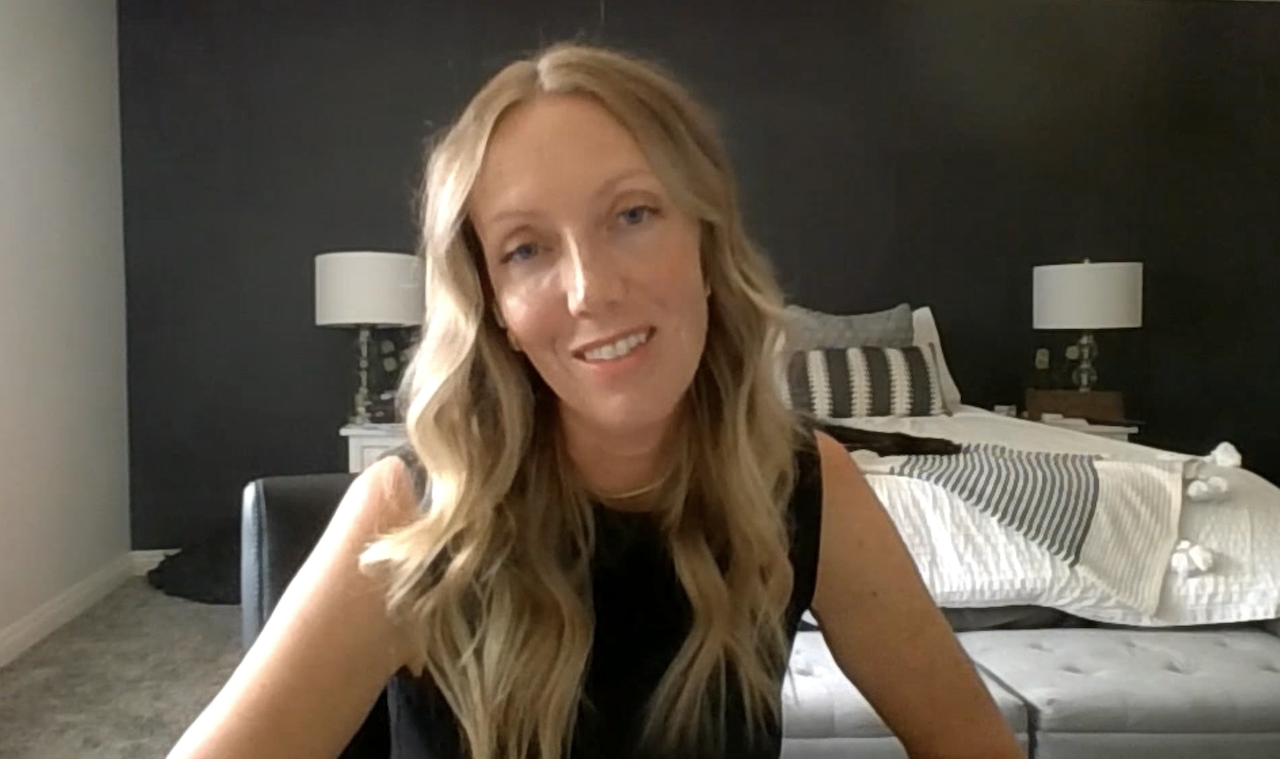
I want you to be the next insomnia success story I share! If you're ready to stop struggling with sleep and get your life back from insomnia, you can start my insomnia coaching course right now.
Lu spent most of her life as a great sleeper. Then, six weeks after having her first baby, a painful mix of pressure, anxiety, and one sleepless night made sleep feel difficult for the first time.
Over the years, insomnia came and went. Medication helped her through some difficult periods, but Lu still felt stuck and afraid of the part of herself that struggled at night.
In this episode, Lu shares how self-compassion, a more workable response to wakefulness, and adding meaningful actions back into her days helped her build trust in herself again — and allowed her to emerge from the insomnia struggle as a stronger, more confident, and more resilient person.
Subscribe: Apple Podcasts | Spotify | Amazon Music | iHeartRadio | Podchaser | TuneIn
Transcript
Martin: Welcome to the Insomnia Coach Podcast. My name is Martin Reed. I believe that by changing how we respond to insomnia and all the difficult thoughts and feelings that come with it, we can move away from struggling with insomnia and toward living the life we want to live.
Martin: The content of this podcast is provided for informational and educational purposes only. It is not medical advice and is not intended to diagnose, treat, cure, or prevent any disease, disorder, or medical condition. It should never replace any advice given to you by your physician or any other licensed healthcare provider. Insomnia Coach LLC offers coaching services only and does not provide therapy, counseling, medical advice, or medical treatment. The statements and opinions expressed by guests are their own and are not necessarily endorsed by Insomnia Coach LLC. All content is provided “as is” and without warranties, either express or implied.
Martin: Okay, Lu, thank you so much for taking the time out of your day to come onto the podcast.
Lu: Thank you for having me. I’m happy to be here.
Martin: Great to have you on. Let’s, as always, start right at the beginning. what do you think caused your initial issues of sleep, and when did those problems first begin?
Lu: Yeah. So I actually never thought twice about sleep. I was a great sleeper my whole childhood and college years, and I remember people around me struggling with sleep and wondering, like, why and what that issue was. I had sisters who I remember on Christmas Eve, they wouldn’t sleep all night because they’re excited, and I remember I had the pillow and I’m asleep.
Lu: So that’s just how life was for me, and I think I really treasured sleep. Like I, I really loved it. It was a very, good place for me to go. So it was not until I had my first baby, and I was about six weeks postpartum and struggling so much with my milk supply. I had this baby boy who was just insatiable, so hungry, and I was very bent on breastfeeding only, and so it was killing me that it wasn’t working.
Lu: And so I was desperate, and the pediatrician gave me a medication that said it would increase my milk supply. And I had this adverse reaction to the medication and had a, like anxiety attack, and I had never had something like that. I never experienced that, and I could not sleep. I could not sit still.
Lu: And I just never felt that level of anxiety before, and it was so unlike me that it sent me into this night of not, sleeping, not even one time, and that never had happened to me before. And so much else was going on. I was sleep deprived anyways. Six weeks postpartum, first baby. I was young, 23 when I had my first baby, and so I just, I was in a tough place and I felt like once I hit that level of anxiety, I knew what it was like.
Lu: And even though I got off that medication, I had been there, and so I feel like my heart went back there pretty easily after that.
Martin: Sounds like we’ve got a few potential triggers going on. Everything related to having a baby, the hormonal changes, the life change, all the stress, worries, and everything that comes with that, and then the introduction of the medication.
Martin: when this first night of sleep disruption showed up, was it a case of you- Finding it pretty easy to attribute that sleep disruption to all these changes going on, or did you immediately think on that very first night that, something is really wrong here?
Lu: I think for the first time ever, there was this very added pressure to sleep.
Lu: I hadn’t slept, I had a new baby, I had the milk supply thing that was also a big pressure, and I just felt like I had to sleep, otherwise I wasn’t gonna be able to be okay. And there was a lot of pressure around, sleeping when the baby slept, sleeping to, for my own health and milk supply, and I just had all this pressure building up, and all of a sudden I could not sleep.
Lu: I could not sleep. And that was a very distinct memory of, the beginning of when I… I, and I never had it before, and that’s another thing is I just had never experienced that before. It was pretty traumatizing for me from that very first beginning bad night.
Martin: Sleep was always something that you felt you could rely on.
Martin: You never had to give it a second thought. It took care of itself. It showed up, and now suddenly it had disappeared, and you quite understandably really wanted it to come back. And then you notice that no matter what you were doing, the pressure that you were putting on yourself to perform sleep in order to get it back, it was just not really working out for you.
Martin: It just remained elusive, remained a struggle.
Lu: Yes, and it was such an intense one suddenly. just, I felt like I went from, never thinking about it to it was all that I thought about, and it just felt like this gift that I had that was just gone, just vanished, and, I needed it more than ever.
Lu: I was a new mom, and I just didn’t know how to do life without it. So it was pretty dark, honestly, for me in those beginning weeks of trying to adjust to being, a mom, and trying to feel capable, I got this, I can do this, and just totally threw me for such a, loop that I didn’t expect and I didn’t know was coming.
Lu: It was really difficult for me.
Martin: This was a time in your life when sleep perhaps felt more important than it ever did in the past.
Lu: 100%.
Martin: So because you’re a problem solver, an action taker, you’re not someone who just sits by and lets problems stick around, you obviously tried to fix this issue and deal with this, these sleep problems.
Martin: Can you tell us a little bit more about what you did in response to try and get sleep back on track?
Lu: Yeah, now that I have so much experience with insomnia and others who have had it, especially being part of your, community, we are achievers and problem solvers, us insomniacs. We really care, and we work really hard.
Lu: In fact, one of my great strengths, like at work we take a strengths test, and my top- one of my top strengths is achiever. I’m a checklist, let’s make this happen, let’s fix this type of person, and I’m a nurse, and so I know a lot about health, and I’m a researcher. So oh, yeah, it sent me into a spin of all the research, all the supplements.
Lu: I’m also very, holistic, like super natural childbirth. That’s why I was so bent on the, breastfeeding only. And so all these expectations I had for myself were slipping away. And I did everything, possible I could do, starting out with the most, holistic and natural type stuff, magnesium, calcium, melatonin, routines.
Lu: People who had told me how to relax and calm down, ’cause I had never even really dealt with that much anxiety before either. I think anxiety and insomnia is like the chicken and the egg. They both really correlate. And but it didn’t feel generally anxiety about my day as much as the night. It was all sleep anxiety, as you have called it.
Lu: That is– It all surrounded sleep. And so I started to believe that there’s a postpartum issue, and I think that’s true. I think there’s some truth to that, hormones and everything. And people would ask me about depression and insomnia, anxiety, but it- none of it was really anxiety and depression to me.
Lu: It was all because of the insomnia. that to me felt like the main thing, and then the other things came because of the insomnia. But I tried everything, and I would lay awake at night Always. And then knowing a baby was gonna be awake soon, feeding a baby, catching naps or anything like that throughout the day became absolutely impossible.
Lu: And it started to get to the point where it would get dark at, evening would come, and a pit in my stomach and just cringing, dreading the night. Life started to seem really long. days were long anyways with a new baby, but nights were even longer. And I started to look ahead at my life and think, “I can’t live like this.
Lu: I can’t do this.” And so it was a really… Yeah, that depression really did come over me at that time.
Martin: you just really described how difficult the entire experience is, and no matter what you’re doing to try and fix this just doesn’t seem to be working, which can be very concerning.
Lu: Yeah.
Martin: Most things respond really well to effort in life, and then when that doesn’t happen when it comes to sleep, it just creates more worry and concern.
Martin: Kind of feeds into that anxiety.
Lu: Yeah. It really does.
Martin: I suspect that there might be this preconceived idea that because you’re in the medical field, you have access to the best insomnia advice, the best insomnia resources. What was your experience as someone struggling with insomnia, being in the medical field?
Lu: I can see why people would think that, and no, I dis- I disagree. I think even seeing doctors, and I have because, I’m… This is 20 years ago. My oldest baby now is 20. So I’ve been doing this a long time, and I’ve met with many different doctors about this, and I’ve never had great solutions, only medication.
Lu: Some sleep clinic kind of offerings are definitely some medication for, to treat depression, so like an antidepressant or something like that offering to deal with what they deemed as the root cause of the insomnia was depression or anxiety, and I definitely tried that. Desperate times came to desperate measures for me ’cause medication is not something I, I do.
Lu: I barely do Tylenol. But I, When I was desperate and I felt like I couldn’t do my life like this, I did turn to medication. And at the time, this was, 20 years ago, Ambien was what they prescribed. And I will say that helped. It helped a lot, and it gave me help. It gave me something where I wasn’t just me dealing with this, that I had this, Band-Aid fix to turn to.
Lu: And what ended up happening, at least with that first baby, is with some months of reliance on the Ambien, of course, I had such shame and guilt for taking it, didn’t wanna take it at all. But like I said, desperate times. So I, climbed out of that hole, incrementally on my own with the help of the Ambien, and got to a place after months, this was not quick, where I wasn’t taking it anymore, and I felt each night I wasn’t taking it and I was able to sleep was like a layer of Band-Aid fix, and then another layer, and another layer of good nights where I started to forget, and it was a distant thing where I struggled at night and I felt “Okay, I figured this out.
Lu: I’m out of here. I’m never gonna go back here again.” But I always kept that Ambien around ’cause I, I grew a great kind of reliance on it, which I hated, but I also needed it. if I traveled, I would just bring it with me, often not using it, but just having it made a difference to me. and I lived like that for many, years, using Ambien seldom ’cause I didn’t wanna use it, but using it nonetheless when I needed it.
Martin: It’s very easy to vilify a medication, especially when it comes to sleep and insomnia, and I think that can be a mistake because it can play a part. the issue as you shared can come up when use moves past the short term, when it becomes- Yeah … more of a long-term crutch, when taking medication is something that doesn’t really reflect who you are or who you wanna be.
Martin: Because there’s some people who don’t care about taking medication, and that’s absolutely fine. And then there’s other people, like yourself, who really are more adverse to taking it. They would rather not take it. And so it’s every time you’re taking it, or as you framed it, “I’m using it even when I’m not taking it because I’m carrying it around with me,” it’s a kind of reminder of the power and the influence that sleep and insomnia is continuing to have over your life.
Martin: And that in itself can just- Keep you feeling a little bit stuck too
Lu: Absolutely. it really does. But yeah, I was grateful because I felt like it was the thing that got me out of it that first time. And so it just became like I had this relationship with that bottle of Ambien. I just had to have it around.
Lu: And but I think you asked about medical field. My medical background made me know that this isn’t a good thing long term. It’s not a, “I’m just gonna do this from now on” fix. I had that awareness, and so I definitely used it as an incremental, I need it for now ’cause I’m in this crisis or struggle or odd scenario where I was traveling or, this night is off, I’m really stressed about tomorrow, and I would use it for those type of things.
Lu: But every time I did, there was that, ugh, I felt not good about taking it, yet I felt like I had no choice, and I didn’t have other skills, other coping skills. I, developed a little bit on my own trying to deal with these hard nights. Of course, you have to, and you have a lot of time to do it, but nothing really concrete.
Lu: The most concrete thing to me was the medicine. I remember thinking by about seven months old, my, my baby was seven months old, that I was really feeling pretty good and back to myself. Felt like I was really accomplished for pulling out of that kind of on my own, even though it took way more time than I wanted it to take.
Lu: And I was feeling really good, engaging in my life, feeling like I know how to be a mom now and enjoying it and finding myself again. And I was new, it was new because I had never been in this place before, and I was doing well to the point that, we got pregnant again, and we thought, “Okay, this is…
Lu: We’re on to the next thing.” And I was really excited about that. I was ready for that. And about halfway through my pregnancy, at our first ultrasound, we found out we were having twins, and that was the shock of my life. And from that point on, that anxiety… ‘Cause I was like, “I’ve done this before. I know what I’m doing.
Lu: I’ve got this.” And twins threw me. I was like, “No, I don’t got this.” I… This is gonna be really hard, and that anxiety crept back in, and I started to not sleep again. And it went into, that not just sometimes or a little bit here and there, but, a crisis of, week after week of not sleeping, and I was pregnant And it was, yeah, this, that was really, hard.
Lu: And when they were born, they were in the NICU, and we moved out of state, and just again, a circumstance of, perfect storm of so many things happening in my life and hormonally that, again, I chalk that up to, postpartum difficulty, and I need help. And so Ambien, and so that was the first time I took, an antidepressant after those babies were born ’cause I knew I was in a dark place.
Lu: I, I recognized it, and I recognized it sooner and faster, and I needed help. And so I… And I did get that help, and I’m grateful for medication, that it, did help. But again, it took me some months, probably six, seven months again, where I had three little babies basically, and I was doing so much better. I pulled out of it again.
Lu: But those were some really dark months, to the point where it’s traumatizing. I think back to those postpartum periods, and I, was really not myself and feared this part of myself that has really influenced the rest of my life because I feel like there’s been this part of myself that I shut away.
Lu: I’m afraid of that part of myself, and I’ve really exiled it. I’m like, “I can’t deal with that part.” That’s part of why I’m busy. I’m distracted. I don’t like to be still. I don’t like to be in my head too much because I think I’m always avoiding that, crazy, scary place in myself. And so I would do pretty good with all of my things and my life and, really determined to be a good mom and, have this life that I wanted, and I have a really beautiful life.
Lu: I’ve been really blessed and grateful. We actually had another baby after my twins, and that sent me through another really dark, place again. But I really came out of those things learning and– But yeah, I would have, setbacks, and I would have bad nights, and they would turn into weeks, and I always was so shameful and dreadful, dreading that time and that place where I knew insomnia would come back at me again.
Lu: And I’ve been dealing with this for 20 years, and it has been, it’s been, something I don’t like to talk about, share, because it’s just been such a, painful place for me.
Martin: I appreciate you coming onto the podcast to share your journey, even though it’s difficult to reflect on. It can just be so helpful to, e- everyone else listening who can identify with your situation or your circumstances or your struggle, and it can be so powerful.
Martin: And perhaps also, in a way, it can be a little cathartic as well, just reflecting on your own experience with the struggle and what made things more difficult, and then as we’re gonna move on to, the emergence, the transformation, and what things are like now, what you took from the whole experience in order to move forward as a stronger, more resilient- A person who’s grown from the actual experience.
Martin: Rewinding to when you found out that you had twins and you noticed that anxiety and the struggle with sleep showed up again, was, that sleep disruption appearing even though you were taking the medication, or were you not taking the medication at that time?
Lu: I wasn’t taking it at all until after I found out they were twins, and I started getting, sinking into that anxiety.
Lu: Of course, I was pregnant. I didn’t wanna take it at all. And I had a doctor who was not very compassionate and understanding, I think. I felt like nobody… and I would say it until you, I really never did. I don’t feel like I ever really had anybody who I felt really seen by or understood in the medical field.
Lu: And even in my friends and my personal relationships, unless you’ve been here and done this, especially as, elongated as I’ve experienced it, I just don’t think you, And that’s fine, but you just don’t know unless you’ve been here. And so that was really hard for me, but she did okay for me to take a smaller dose of Ambien, and I did And I would survive on, a little bit of sleep and handling, taking it then.
Lu: And I was, closer to the end of my pregnancy. There was a lot of other concerns. I was put on bed rest. Twin pregnancies were complicated, and so there was so many reasons to have anxiety, so many reasons not to sleep, especially with two babies, fighting in there. I was a hard time to sleep, and it was very understandable.
Lu: But I barely made it through that pregnancy, and by the time they were born, I was not okay. And they went into the NICU, and that just made everything even harder. And so it was just a really understandably difficult time, and I relied, yeah, really heavily, especially once I wasn’t pregnant anymore, on taking Ambien just every single night, and other medication as well.
Lu: it was just desperate times. It was a bad place for me.
Martin: When you found my website, the sleep coaching programs that I offer, what made you think that there was something different here or something worth pursuing, something worth taking a chance on?
Lu: Yeah. So I had never had such a dark time, with this whole struggle as I did postpartum.
Lu: And so to me, in my mind, it was always a postpartum thing and the hormones and not who I really was. And I just chalked it up to that, and it made sense. So I never exper- So I’ve had a little bit of, bad nights and setbacks, but nothing like that lasted weeks, months. Nothing like that until I think my oldest son, we moved him out.
Lu: It was the first time we moved, a kid out of our house, and he’s growing up. And once I kinda knew that he was settled and good, I think I was holding things together. And life is so busy. I work full-time as a nurse. I have these four kids, teenagers, so much going on, and I was doing my life, and I was busy, and I loved it.
Lu: But I was running myself, really thin. And once I knew he was good, I feel like I immediately collapsed, and in a way that I didn’t even know was possible. I really thought this was postpartum only for me, and there was no reason for it. I had no baby. I had no pregnancy. I had nothing to, blame it on.
Lu: There was no even particular incident or situation. I just immediately collapsed and, stopped sleeping, and it started to creep into, six weeks. Of using Ambien like I’d never done, since my babies were young, and feeling like there’s no reason for this. What is wrong with me? And I, I’m in my 40s now, and I think I just s- I went to the doctor, and their solution, as usual, was, other medication, and definitely discouraged me from Ambien.
Lu: They did not want me taking it like every night, and I didn’t wanna be taking it every night either. But she didn’t help. There wasn’t any, understanding, empathy, or felt like I was being seen by this doctor. And so I walked away from there thinking, “I’ve really gotta figure this out. It is high time that I address, underlying root cause.
Lu: I’m s- I’m done dealing with it like this.” Band-aiding it is what I would say I’ve literally done for this long. And so I was listening to things at night, podcasts like on my headphones when I wasn’t sleeping, which was every night. And I looked up insomnia on, my Apple Podcasts, and that’s where you came up, and I started listening to these stories from people.
Lu: And for the first time, I felt seen. I felt understood. I felt like I wasn’t alone. And y- if you listen to enough of these stories, you start to see that there are a lot of them are the same. Different circumstances, of course. But as, like the real struggle with sleep and the way it manifests and the way it takes over and the way it cripples you, it’s all very much the same.
Lu: And then the way to get out. The way to get out is all a lot the same And I just listening to your voice and some of your YouTube videos, I started listening to you a lot, and it really was the first time I felt like this is something that is helping, and I feel like I could really dive in and I’m ready to work on this, for real, and not just Band-Aid it anymore.
Lu: So I signed up for t- your free, couple week newsletter that you do, and I would say even just in those two weeks, I started doing better. And so I was pretty sold. It was pretty easy for me to invest in the course.
Martin: You realized you weren’t alone. And when the doctors suggested, we don’t want you take– you shouldn’t be taking Ambien anymore.
Martin: We’re not gonna have medication as an option,” but what’s the alternative? You weren’t offered an alternative. What was offered in my sleep coaching programs, what was being discussed in the podcast episodes was an alternative that you were curious to pursue.
Lu: Yes, exactly, and I’m very, wanting an avenue that’s not medication, so much.
Lu: I just hadn’t been offered that, or I needed… I really needed hand-holding through it because I think even being, like, this grown-up person that has a, a life and a lot going on, and I listen to many people on your podcast who have incredible careers and accomplishments. But when you’re in this struggle, it is so vulnerable and isolating that you can’t see clearly and you need someone to say, “This is what you do, and this is where you begin, and then this is what you do next, and you keep doing it.”
Lu: And you– it’s almost like just a guide through that, and I feel like that’s what kind of in my heart I knew I needed something like that, but I had no idea where to begin. And when you start looking online, it’s such a, deep dive to so many different things. It’s very overwhelming. I didn’t really know where to– which way to go and what to pursue, and it wasn’t until I just listened to you and the episodes where I started to feel, not with like my research brain and not with all the logistics that I was thinking about at the time, I, really felt it, in my heart.
Lu: I felt like I, I know this is gonna be good for me. I feel like this is right. I’m a really spiritual person. I literally, prayed about it, and I felt like you were the right place for me to go. And I just listened to that ’cause it was hard for me to invest. Even though the money for the class is not like it’s grand, it’s just like I think it was hard for me to invest in myself.
Lu: I’ve always just take care of everyone else, and I think that’s something I really learned in your class. One of the best things I learned is that I have to take better care of me. So
Martin: that first step of self-compassion or being kind to yourself was making that investment in yourself by- Taking the course.
Martin: and ultimately you were looking for a plan of action. You wanted a roadmap.
Lu: Yes, and I wanted somebody too. I love the plan, but there was something about you. I could listen to your voice, I could listen to your videos, and then I had the e-m- I could email you. And something about insomnia that I think is really one of the hardest things is how isolating it is.
Lu: And even people who know me so well and love me so much, they weren’t really helpful in this for me. And so I really did feel alone. And there’s something about the middle of the night, right? That the world’s asleep and you’re just alone. And I- that’s- I think that’s part of why I just dreaded it so much.
Lu: I just don’t like… I’m not an alone person. I’m not good at being alone with myself and in my own head. And I think that comes from my years of avoiding myself, and I had never really been willing to engage in that. And your class gave me like a framework to actually just do that incrementally and with your help and your support, it really was a perfect recipe for me.
Lu: I started feeling and doing better almost immediately.
Martin: Let’s talk about action. As you were working through the course, what springs to your mind in terms of these were the changes I made that were most helpful?
Lu: Probably the biggest thing was the self-compassion. I did not really address my inner world, which I think is such a great thing to be aware of now.
Lu: It’s not something I thought was great to be aware of prior. I avoided my inner world. I avoided sitting there. Like I said, I was- there was this part of me I was really afraid of. Because I had experienced it before, I felt like it almost destroyed me, and my life, and my goals, and my family. And so it was worth running from to me.
Lu: I didn’t wanna go there. And so being willing to address that and actually sit in my head and with myself, and what I realized once I did that with your, prompting was I’m really, unkind to myself. the inner self-talk that was happening was super harsh. And I wasn’t even aware of it ’cause we just swim in it, right?
Lu: You’re just in your head, you don’t realize. And so that awareness was huge to me. And I think you said something where, you know, if you could treat yourself like you would treat someone else who was, struggling in this kind of scenario, and at what kind of compassion you would offer. I’m a nurse.
Lu: I live for empathy and compassion, and I’m a mom. I’m, like, the most patient and kind to anybody else. But it just shocked me when I realized how opposite I was, just to myself. And I think I was… I needed a wake-up call. And looking back now on this journey, especially my most recent collapse, which has been almost two years now, I needed it.
Lu: I really did. I learned so much from it, and I’m living such a fuller, more whole life now than I was these past years just band-aiding it before ‘Cause I’m not, afraid of me. I can sit with me and I can talk. It’s that kind inner self-talk. Life changing for me.
Martin: Something you just said was, “I can sit with me.”
Lu: Yeah.
Martin: When you s- when you say that sentence, is that about being more open to the thoughts and the feelings that your brain generates? So instead of perhaps trying to resist them or push them away or add judgment and harsh self-talk on top of them, it’s more about opening up to them and acknowledging them, allowing them to come and go, seeing what information they might contain.
Lu: 100%. Yeah, exactly what you said, and you always say it so well. I loved… I would listen to that, basically what you just said, in one of your videos or pod- and over again, just to keep reminding myself that I can just be with me and I can welcome anxiety. I started naming it, like you said. hon- honestly, like putting, like a face and a name, like almost this creature, this anxiety creature.
Lu: And I would just say, “Welcome, and come and sit with me.” And I imagine myself on this park bench, and it’s “Anxiety or insomnia, whichever one, you’re welcome to sit with me.” And I would say, “Stay as long as you need. you’re welcome here.” And instead… ‘Cause I felt like there was this part of myself that was so afraid and had been so pushed aside by me, that I welcome, that part of myself.
Lu: I think you have to really start to reconcile and be okay with all the parts of yourself. There’s many, right? The shameful, the embarrassing, the painful, the difficult, and you just… That’s what I started to do. Instead of… No parts are exiled. All are welcome. And that was… that is not a quick fix, so you don’t get to just say that and be like, “Ta-da.
Lu: Now I’m done.” And I wanted it to be like that. I wanted it to be like, “Ta-da,” but it was incremental and consistent and a commitment in daily practice. Another thing, as we’re talking about what helped so much through class, was you gave me this power back in my day. ‘Cause the insomnia to me was always about the night.
Lu: And I felt like I had no control over the night. And no one else was around, and I was gonna be alone, and it was just this terror that I, dreaded. But you said things about the day that you can control, and that’s always in your action. And I actually didn’t have a lot of anxiety in my days. I would just if I ever thought about sleep, which I tried not to do.
Lu: But I found that if I engaged in my life, and especially with more of your permission, I kinda did that naturally, but I feel like you named it. You– There was a point, I think, where you drew a circle and it had these big letters of insomnia, I-N-S-O, and it just took up the whole circle And if you put in, my kids’ sports games, and date night with my husband, and playing volleyball ’cause that’s something I love to do, hiking my dog, and just stop, like omitting things from my life that I love, then that insomnia by definition got smaller in the circle because I had all these great things that I was adding in really intentionally.
Lu: Because it is hard, it’s almost like gravity, I think for us that struggle with insomnia. As we struggle, things start to leave our life because insomnia just starts to take over. And so if you can deliberately change the day, and I felt like I had control over the day. So I started to change my days, and by changing my days, my nights started to change.
Martin: As you added more of the stuff that matters to you each day, insomnia may have still been there, but it was taking up less space.
Lu: Exactly. That was huge. And I would find as I engaged in things I loved, I, would leave like a dinner or an event that I was at, and I would almost forget that I was tired. I forgot that I didn’t sleep last night, and I had at least an hour of that day where I didn’t even think about sleep.
Lu: And so that encouraged me. That’s like I want to engage in my life. It helps me not think about this. I don’t wanna spend all my time thinking about this, or talking about it, or listening to it. I want to just be present in my life. And then I realized I had several hours in the day where it didn’t even occur to me that I wasn’t sleeping, and that was really encouraging, too.
Martin: The focus of your attention expanded, so no doubt there were still some times when your brain started to think about sleep again. But it wasn’t your entire focus now. You had more stuff- Yeah … to focus on, and perhaps you were also consciously putting some effort into expanding the focus of your attention as well.
Lu: E- exactly. Like I, think I did it a little bit anyways in my years that str- I struggled with it, but you made me aware of it, so then I was more deliberate.
Martin: Going back to what you were sharing about this idea of naming and welcoming anxiety, for example. Now I get the impression you’ve spent many years, so you had this incredible skill in resisting anxiety.
Lu: Yes.
Martin: To go from that to practicing an approach of opening the floodgates and actually welcoming it-
Martin: how do you get over that hurdle? How do you actually take that action?
Lu: Yeah. I, will say it’s really one of the bravest things I’ve ever done, and I’ve done a lot of really brave things in my life with my kids and nursing school and life.
Lu: It seemed contraindicated for what I was working for, ’cause I truly was running from this place for a long time. But I w- it was living in the reality that wasn’t working anymore at all. It, Not only was it not working, it was, like, ruining me. And I started to believe that. I was like, “What I am doing is, opposite of helping, and so I’m willing to do something completely different.”
Lu: And so I started small, but very deliberately. Your class is a great guide to that. It’s like a slow… I think I told you, I’m so glad that you only let one week at a time information come, because I’m such an achiever. I would’ve gone through that whole six-week class in, three days, because I wasn’t sleeping and I had the time.
Lu: But instead, I could only open one thing a week, And I would have to sit with those things. And instead of just listening to them, I had to actually put them into practice. And that is the real reality. ‘Cause really what you said was pretty simple, but it wasn’t in practice, and so that’s… I had to apply it to, m- the landscape of my life, my personal life.
Lu: And as I started doing that, I would say it was pretty quick, like days of me welcoming anxiety, letting it sit there instead of being so afraid of it. I realized it wasn’t so fearful, and in fact, I felt… I actually felt sorry. I felt sad. I felt sad that I didn’t do it sooner, because I realized that I needed it so desperately.
Lu: That part of myself I think needed my attention, needed my love, needed my welcoming, all that whole thing that I was doing. It was needing that for many years. Many, years. I wish I would’ve done it sooner. And I think one of the… This goes for so many aspects of our life, but when you really fear something, one of the best things is to just face it and just bring it on, bring it here. let’s sit with this. Let’s face it. It’s such a duh to me now. I wish I would’ve… I feel like I’m smart enough that I should’ve done this sooner. But I, again, I really empathize with those in the struggle, ’cause you almost become like this little kid. you’re just struggling so much.
Lu: You’re so vulnerable, and have these blinders on where you just can’t see what would be the best move for you.
Martin: It makes sense why you resisted it for so long. What matters here is you got to a point where you realized or you noticed the strategy was no longer serving you, so you wanted to do something different.
Martin: Doing something different is hard, is difficult, and often scary. I’m curious to know, if you’re willing to talk about it, what that very first time was like when for the very first time you opened up the gates and you actually practiced welcoming or just allowing anxiety to be present.
Lu: Yeah. It is a little hard to pinpoint exactly, but it is such an incremental process.
Lu: But I would say it was not even half as scary or difficult as I thought it would be, and that there was actually s- like a real sadness to me, like that I didn’t do it sooner, that I had pushed this painful place. ‘Cause truly it was just this painful place in me that I was unwilling to address. And I think that once I did it, there was a relief and some peace that I hadn’t quite experienced because it was always there in the background that I worried about it.
Lu: So it was pretty immediately obvious that this was a good choice and a good path to pursue.
Martin: Perhaps without that prior strategy of resistance, you wouldn’t have been motivated or you wouldn’t have found this change of approach to be so powerful, so insightful.
Lu: I agree. I, can’t go back and, change it.
Lu: I do feel like we walk through suffering and difficulty for great purpose. I think that is… we go back and think in these very difficult times is where I learned the most about myself and about just what matters to me. And that’s another thing that helped me a lot is any time I’ve been stressed or not sleeping, it’s a real indication to show me what matters to me, what I’m stressed about, what I’m worried about, and to, acknowledge that and say, “This is important to me.
Lu: I care about this, so this makes sense.” And again, any time you do that practice of just saying… even your, line that you say all the time is thank, to thank your brain for looking out for you. And just that change in, gratitude and love and kindness and understanding for yourself and why you’re doing all these things that before subconsciously I was doing and I just wasn’t aware.
Lu: It’s such a peaceful, helpful practice. But I think when things are good and you’re back in your groove, you forget. You don’t do these things anymore because you’re not suffering. You’re not… Your things are going well. And so that’s something I really committed to, ’cause I’ve had the good times and the bad times enough.
Lu: I’ve lived this rollercoaster for a long time. I really, after doing your class, made such a commitment to myself That I would work on this daily. Like I… So over the years, I’ve developed like a daily practice. I call it like a stillness practice, because I’m really bad at being still. And I wanted to take time in my day every day to be still.
Lu: And it developed, I wrote it down first. It was m- many things from your class, many things like scripture and other things that are important to me, and I just basically wanted all the things I wanted to remember every day said to me. And so I would read it, I would add to it, and I’ve developed actually m- my favorite method now that I have is I read it in like a voice memo, because I love listening to you so much.
Lu: I, so I made my own. I made my own voice memo. It’s my voice with all of my favorite things that have been so helpful over all my setbacks and difficulty, and I listen to it every day. I’m super committed to it. It’s my own stillness practice. It’s only three and a half minutes, and so there’s really no excuse to not listen to it.
Lu: And I feel like that is my mental health, like maintenance. I do it every day. That’s been a great new practice I developed after your class.
Martin: What kind of things are in there?
Lu: Oh. Yeah, I actually have it here because I thought you might ask me that. So I don’t have to s- I don’t have to read the whole thing, but I can share with you some of my favorite things.
Lu: I start with, “There’s nowhere else you need to be right now.” That’s like really big for me. Like just settle your body, comfortable position, take a deep breath. There’s nowhere else you need to be right now. I feel like that really helps me actually change like my whole frequency of my energy going on.
Lu: Always remembering to breathe, and then one of my favorite lines that I repeat to myself a lot is, “Stillness is not weakness, it is trust.” I say, “Notice where stress is sitting today. Maybe it’s in your chest, your jaw, your shoulders. You do not need to fix it. You do not need to explain it. Just acknowledge it.
Lu: Silently say, ‘I see you. You’re allowed to be here.'” So just that alone is shifting for me every single day. There’s another line I, wanted to share with you with this. This is another mantra, and I say this to myself a lot now as I’ve really tried to change my inner self-talk, saying, “I am safe, I am healing, I am learning, and I’m loved.”
Lu: I just feel like these are truths that are just like human being. Like we all deserve that from ourselves. “If your mind feels heavy, offer it this kindness. This is a hard moment,” and I say this to at night, when I’m struggling, “and I’m handling it. I don’t need to solve everything right now. I’m allowed to move at a human pace.”
Lu: And then another thing I really love the idea, I’m really spiritual, I really believe in God, but- I just feel like our Savior understands human pace. He walked it Himself, and that is the work of Christ, to rebuild you and renew you on what you once thought would destroy you. And that is truly me. I thought insomnia would destroy me, and I think that’s why I feared it so much.
Lu: And instead, with your help and my own, work on this, I feel like I’ve rebuilt myself on a place that I literally thought would destroy me, and I’m renewed here instead, and it’s amazing and really nothing short of pretty miraculous to me. It’s, been a real life-changing thing.
Martin: Thank you for being willing to share that with us.
Martin: As you were sharing that, some themes started to show up. It seems to be so grounded in permission to have thoughts, to have feelings, uncomfortable ones, distracting ones, comfortable ones, helpful ones, unhelpful ones, just permission to experience them, and kindness to experience it all in a kind way.
Martin: You’re not adding judgment on top. You’re not being harsh on yourself in response. And there’s an element of being grounded in the present moment. There’s an acknowledgement that even when these thoughts and these feelings can show up, you’re still physically in whatever place you’re getting that practice in experiencing them, which I’m assuming is a safe place.
Martin: So it can feel unsafe to have certain thoughts and feelings, but physically you are in a safe place. You’re experiencing all this stuff without it pulling you away, taking you to all these places, and you’ve lost complete sense of the world around you.
Lu: I think another thing that helped so much was just your intention.
Lu: Your intention matters so much. I would go to sleep, or hope to go to sleep, chasing it, like you said, chasing sleep. So I would read or watch a show or whatever it is I did it with the intention of chasing sleep. And the sleep window, I know a lot of people say this, but huge, great tool. Totally makes such a big difference.
Lu: But I would start my sleep window and almost save things for my sleep window, stuff I wanted to read. I’m definitely not somebody who likes to get out of bed, so I loved your permission of do what you wanna do. If you wanna stay in bed, that’s fine. I do– I don’t like to be out in my house, alone. I just…
Lu: It doesn’t help me. And so I don’t wanna do what doesn’t help me. And that you gave me so much permission to just do whatever feels comfortable for you. Your line of let’s deal with wakefulness in a more workable way, I loved that. It made me feel all the, calm, relaxed permission to save and do what I wanted to do, which was usually on my phone.
Lu: It’s so easy to do. I’m not gonna, be concerned about looking at a screen because reading really helps me, and I have plenty that I wanna read, and I would save it with the intention of a kind of an excitement of I really wanna get to this. My sleep window would begin. My husband’s asleep.
Lu: Everyone’s asleep. And I would get to what I finally wanted to read, and the next thing I know, I’m– it’s like morning and I fell asleep, and I didn’t even get to what I wanted to get to. And I think the, only difference in that situation from what I was doing before I took your class was my intention.
Lu: And that is a big deal. And again, that’s an awareness thing. And I wasn’t aware. I, for some reason, I couldn’t do this on my own. I needed you, your class, and your guidance, and I think it’s just led me in the right direction for stuff that already… And it all just made so much sense to me. Everything you said was like, “Yep, that is so me.
Lu: That is so me. I feel so seen, and that’s exactly what I need to do to fix it.”
Martin: Something that stands out for me is you sharing that especially when you first practice this approach of lowering the resistance to anxiety or whatever other difficult thoughts and feelings are showing up, that experience was quite insightful.
Martin: That it, demonstrated to you that you can experience all of those difficult, often very difficult, very powerful thoughts and feelings, and at the same time be safe. Although it might feel unsafe, you are safe. And you can still do things that are important to you when they show up, when they are present.
Martin: And that ultimately because of that, you don’t have to resist. There can be that urge to resist, but when you realize that you can still be safe when you experience them, you can still do important things when you experience them- It can almost give you that added motivation or that added kind of push that there isn’t a need to resist.
Martin: And it can keep you- Yeah … committed to this approach of ongoing practice, repeatedly practicing acknowledging and opening up and making space for these things.
Lu: Yeah. Absolutely. it’s a real change in the way that you’re, like, framing, like the way you think, and it applies to so much. And I hear that throughout your podcast as a theme.
Lu: It- this is not just an insomnia fix or help. This applies to so much that you struggle with. Anything you struggle with really. And so it is a mindset shift, and yes, it will help you with your sleep, but it will help you even more in other aspects of your life because once sleep kind of returns, don’t worry, there’s more to deal with.
Lu: There’s other struggles to be had. And then of course there’s setbacks. I just wanna normalize that. That is And for me, like that, even since, two years ago when I really collapsed and I did the course, and I’ve had setbacks since then. And I, and I’m starting to be a lot more yeah.
Lu: Like you said that, just like you would expect that you’re gonna have bad days sometimes, why would you not expect that you’ll have bad nights? It doesn’t need to be such a big deal. It doesn’t need to be earth-shattering and devastating. Instead, it could just be, bummer and not my favorite, but let’s deal with it in a more workable way.
Lu: There’s all these things I can do now. Like Ambien used to be my only tool, my only, Band-Aid, and now I have so many tools. Every once in a while, I, still think about that. I ha- I do still have Ambien around, but I don’t shame myself for that. I say “You know what? That’s been a tool for me, and it might still be a tool.
Lu: I’m not gonna let go. I’m not a black and white, like never again. But I’m also have so many other tools that I would definitely deploy first, and I would work on… And, that’s what I have been doing. And it has helped immensely. Immensely.
Martin: now I’m curious to hear how your use or relationship with medication changed because what initially prompted you to pursue this different approach was you were looking for an alternative, to medication.
Martin: So can you tell us a little bit more about what your relationship to medication looked like as you were working through the course and perhaps now too?
Lu: When I first started the course, I was taking Ambien, and I just remember asking you, should I just let it go and never do it again and just do this?”
Lu: But, and you weren’t somebody who was gonna advise me on that, which is totally understandable. and yet I, just knew myself and I was like, I’m learning, I’m growing, I’m working on this, but I’m using this Band-Aid net for now because it just feels so traumatizing for me to just let go of the whole night, like I can’t sleep at all.
Lu: And that te- like I said, that bewitching hour for me is a high anxiety-inducing, ugh, time. And there’s something about a setback. Even though I’ve grown and learned so much, I experience a setback and it’s almost like I can be pulled back, like I said, gravity, to square one of that, first time that I was so anxious, and I really have to deliberately fight my way out of that thinking.
Lu: and so I think, okay, it’s okay that it feels big. We’ve been traumatized, us who’ve experienced insomnia and this struggle. And for some reason, if you’re not sleeping, those thoughts start to creep back, thinking, “Is this gonna be it? This is gonna be that moment where I completely fall apart again.”
Lu: And I– That’s the time to shift and start to say, “I see you, anxiety, insomnia, all of those things. I, see that you’re here, that I’m feeling these thoughts again, and that is okay. It’s valid. It’s understandable. Come and hang with me. Sit with me. We, will work on this together.” And I really feel like things dissipate when you shift it instead of just, spiraling.
Lu: Gravitational pull for us that is hard to fight against, so it is willing to fight, and it’s not as hard as you think. It’s easier, you think, to just s- instead just, take a deep breath and welcome that, like those fears and just let them be there with you instead of running and, h- hyperarousal out of it.
Martin: The more practice, the more you develop these skills of being more open and less resistance, the less you felt a need to take or use medication?
Lu: I would say absolutely. Practicing is… I had your, you in my head for sure when I would definitely knee-jerk at 1:00, 2:00 AM when I have not slept yet.
Lu: like I’m gonna get up. I’m gonna go take something. I’m not gonna deal with this because I kinda have over the years developed a belief that I can’t deal with not sleeping. I can’t deal with it. It will make me this crazy person that I fear. And so I will take Ambien even though I don’t want to at all.
Lu: And so it’s such a like war inside myself to deal with which one should I be? Who should I be tonight, in the face of this complexity and difficulty? What, who am I gonna be? And I’m not gonna lie, I still, wrestle with that sometimes. But you said that all practice is useful practice. All practice has value.
Lu: And so before I’m gonna be that person that I always am, I, that gets up and takes something, I’m gonna practice. I’m gonna… This is my opportunity to be in this night, be in the middle of the night, say my things. I’m safe, I’m healing, I’m learning, I’m loved, and I’m gonna let this be. I’m gonna sit here with myself and sit here with this anxiety, sit here with insomnia at 2:00 AM.
Lu: These are all my dreaded like things all together. And that’s been for me to do. It’s not always gone often, especially as I’m further into this, that during that time when I’m offering love, compassion, and space to myself and those thoughts, I wake up and it’s light outside. It’s just, that’s h- that happens, and it happens more frequently all the time.
Lu: On a night that would’ve been me getting up and taking Ambien, I instead dealt with it, and that only breeds more trust in myself. I’m still a work in progress, for sure.
Martin: It does require ongoing practice, and to learn something or to make a breakthrough or a change happen, you have to give yourself that opportunity to do something differently, the opportunity to experience something in a different way.
Martin: And that can be really hard and scary. But without making that change happen, we don’t get that learning experience. We don’t get those insights that can ultimately help us continue moving in the direction we want to be heading.
Lu: Our human instinct is what’s the fastest way out of this? How do I get out of this as fast as I can?
Lu: And that’s, I feel again, normalize that. Offer compassion to yourself for that because that’s so human. We can all relate to that. We are all living in this human experience. But instead, what if you tried something different since whatever you have been doing isn’t working? And offering space and compassion and love, I find that hyperarousal dissipates and I can just be here with me.
Lu: And I know that I can do that day tomorrow, even if I don’t sleep. I’ve done it. I’ve given, work presentations, been at my kids’ sporting events, made dinner, all the things on zero sleep. So I know that’s possible. and I also, there’s something really beautiful about trusting the intelligence of your body.
Lu: And you taught, you teach that in the class. My body will go into the phases of sleep, that deep and restorative sleep. It’ll put me there faster. It’ll be more efficient when I get there. And so all of those eight hour, all that stuff you, you work on in the beginning of the class, so useful. You don’t need to believe in this eight hour, lie and myth really that we all tell ourselves that you have to have this or else.
Lu: I, first of all, I grew two beautifully perfect baby boys on very little sleep, just so you know. And I thought I was like ruining them, and they are 18 and like amazing by the way. and so sleep is not like this end all be all, and the more we think it is, the harder and more pressure we build around it.
Lu: And so that’s been a huge difference for me. Trust your body. You’ll get the sleep that you need to. Once you finally do sleep, it’ll put you in restorative sleep faster, and that sleep is more important than the duration, I think.
Martin: To summarize the, some of the points that stand out to me from the conversation that you found most helpful in your journey, in no particular order, just the order that I’ve put them down on my notepad here.
Martin: One thing that you found helpful was implementing a sleep window, allotting an amount of time for sleep that was more aligned with the sleep you were getting from night to night. You practiced a lot of self-compassion and kindness towards yourself, acknowledging and allowing really difficult and uncomfortable thoughts and feelings to be present rather than continuing to fight and resist them.
Martin: You gave yourself permission to experience being awake and to experience being awake in whatever way you wanted to. So you could go on your phone if you wanted, you could watch TV if you wanted, you could read a book if you wanted. You could just sit with your thoughts and feelings if that felt most appropriate in that moment.
Martin: You were Consciously mindful of your intention behind your actions, so that whenever you noticed yourself trying to control what your experience told you is out of your control. So when you notice, “Oh, I’m doing this to try and make sleep happen. I’m doing this to try and push thoughts and feelings away,” you have the opportunity to respond in a different way with less resistance and a little bit more openness.
Martin: You committed to values-based actions each day. You committed to doing things that were important to you, not as a way to distract yourself or to make sleep happen the next day, to tire yourself out, but just as a way to add more stuff into your life alongside the insomnia, alongside the thoughts and the feelings.
Martin: And that way, they’re diluted. It’s not the only thing in your life anymore. There’s all this other stuff that you’re adding. First of all, is that an accurate reflection of what you feel helped you most? And second of all, is there anything that you wanted to add?
Lu: That was such a great list. obviously it’s…
Lu: It speaks to me ’cause it’s all the things that help the most. But I would say if you’re somebody who’s listening to a lot of these podcasts, you’ll, hear that theme. That is what helps. and I always sometimes thought this is just part of me, that it will always, it’ll always be like this, and I’m always gonna have to fight this.
Lu: letting the rope go on that fight was just… it’s, so liberating, to deal with in a way. So no, I don’t know that I can add anything more. you covered it.
Martin: How long would you say that it took for you to get to this point where it felt like you just weren’t in this ongoing struggle with sleep, that you could live the kind of life you wanted to live re- regardless of how you slept from night to night, and regardless of whatever thoughts and feelings might be showing up?
Lu: I felt like I really started sleeping better and on my own before that six-week class was even over. So I do think it was such a shift for me pretty immediately, but it’s– I was very committed to it, and I was really implementing. I was acting different in my days. I was thinking differently, and so I really was all in, and I do think that helped, and made that a little faster.
Lu: Before I was not thinking about it at all, or it’s not in the back of my mind, and that takes months. I would say it was probably six or so months, from talking to you until I was really feeling pretty sure, pretty on solid ground with it. But I will say there’s been setbacks since then.
Lu: But they’re not months in the making, They’re, like a tough night. usually for a reason like this last month I had to travel like three weekends out of the month out of state for various tournaments for my kids, and they’re stressful and there’s a lot going on, and we’re sleeping in different places.
Lu: And so yeah, I got thrown for sure. I had some bad nights and– but I just feel like, yeah, that’s normal and that happens, and I just– it didn’t feel such, so heavy. And I think I started working more deliberately. I told you I’m deliberate already with my daily practice, but when I struggle, I become even more deliberate.
Lu: I think extra hard nights need extra kind days, and I think that comes from you, and I work on that. And so I would say once I got back from out of town and I had some bad nights, it was probably less than a week before I felt really normal and back to myself again. But it took me a few days, even when I was home, to get back to me.
Martin: The context you gave in terms of, I felt like my sleep was doing better within the six weeks of working through the course. But that doesn’t mean that once the course ended, then every single night was great. There were still times when- Yeah … sleep didn’t show up as you wanted it to show up. there were still nights where you found yourself getting pulled into a struggle again.
Martin: It’s not like the struggle was just gone forever. But that was your opportunity to take these tools and put them into practice again, because your experience told you that these tools were helpful for you. So it’s just a case of making sure you dig through that toolbox, find the, appropriate tool, and just continue to get the practice in again and again.
Lu: This life we live here, it’s relentless, That no matter what it is, whether it’s sleep or other things, you don’t just get these quick fixes like where it’s all gone and all never again. I think it’s a continued work, and it’s easier on yourself if you accept that and just know that nights won’t be perfect, days won’t be perfect, and that’s okay.
Lu: And the continued practice is not, cumbersome and “Ugh, not again.” Instead it’s “This is a great opportunity for me to keep working on this, and it’s important enough and worth it to keep working on this.”
Martin: How has this whole experience changed your life?
Lu: Just like an inner peace that I feel, like just so much more trust in me as like a whole person, my inner world like I was talking about, and then also just my own body.
Lu: Instead I was, like, running and fighting from a, lot of this and not trusting that, thinking I was truly broken. That’s, again, part of being human, but brokenness doesn’t have to be, like, the end of you. I think it’s actually really beautiful. There’s this art, it’s like a Japanese art, it’s called Kintsugi.
Lu: It’s so beautiful of that concept of brokenness is really beautiful and embracing flaws. They put the pottery back together with gold, and it’s considered even more valuable and more beautiful after than when before when it wasn’t broken at all. And I think those cracks and brokenness in us, it’s how the light gets in, and it’s what, how we learn.
Lu: And so I am just way more willing to embrace, my humanness, my brokenness, which has for me been insomnia. For other people it’s different things. But the, this is something that’s really taught me a lot about myself, and I’m… needed help to, get to this place, and I feel like your class and you were exactly what I needed.
Lu: And if I was in a moment struggling, like if I was in the struggle right now, I wouldn’t hesitate to jump in on this, because it was life-changing for me.
Martin: You’re in a better place to where you are in the past. You’ve emerged from this as a stronger, more powerful, more resilient person.
Lu: I really, believe that.
Martin: If someone with chronic insomnia is listening, and they feel as though they’ve tried everything, that they’re beyond help, they’ll never be able to stop struggling with insomnia and all the difficult thoughts and feelings that come with it, what would you say to them?
Lu: I see you and I feel you and I’ve been you and I just, I know what that’s like.
Lu: And I would say one of the first and most powerful things you can do is change the way you are speaking to yourself. The inner self-talk, changing that to kindness and compassion, offering the compassion that you would to someone else you love who is in that scenario. It really opened my heart to think like that.
Lu: If one of my kids was literally going through exactly what I was going through and all of a sudden my heart just burst open with empathy and compassion and love. If you can find it in yourself to offer that same love to yourself and make yourself like practice it, set it up for every morning that you’re gonna be grateful and be kind and say some like really great things to yourself.
Lu: That practice is really life-changing and I would start there. That’s where I would start. And then I would take your class.
Martin: Thank you again, Lu, for coming on. I really appreciate it.
Lu: Yeah. Thanks for having me.
Martin: Thanks for listening to the Insomnia Coach Podcast. If you’re ready to get your life back from insomnia, I would love to help. You can learn more about the sleep coaching programs I offer at Insomnia Coach — and, if you have any questions, you can email me.
Martin: I hope you enjoyed this episode of the Insomnia Coach Podcast. I’m Martin Reed, and as always, I’d like to leave you with this important reminder — you are not alone and you can sleep.
Please share this episode!
)