
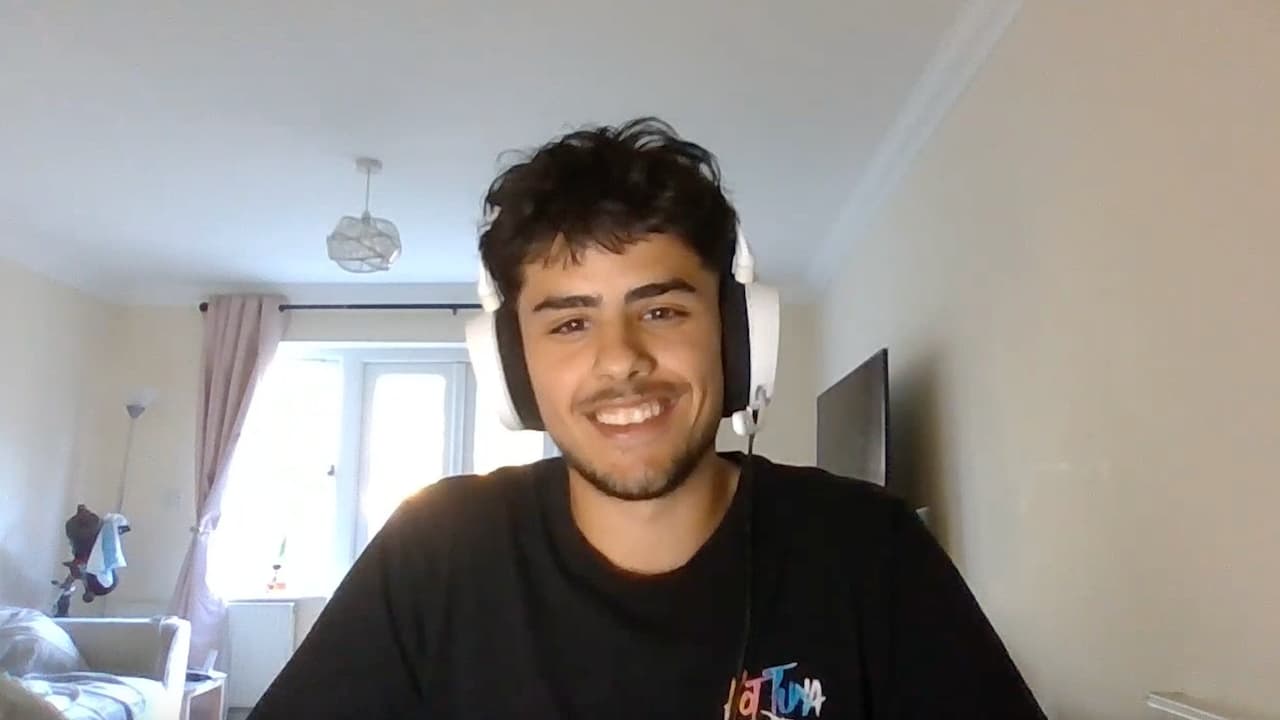
I want you to be the next insomnia success story I share! If you're ready to stop struggling with sleep and get your life back from insomnia, you can start my insomnia coaching course right now.
After one sleepless night around his 17th birthday, Joey began to fear the next night. Soon, thoughts about sleep followed him through the day. He stopped going out, struggled to watch films, and sat inside with the curtains drawn.
He tried herbal tea, meditation, rain sounds, earlier bedtimes, and forcing the thoughts away. The more he tried to solve sleep and silence his mind, the more stuck he felt.
What helped was allowing the thoughts to be there while returning to the things that mattered. Joey went back to the cinema, gym, college, sports, and nights out. The thoughts did not suddenly and permanently disappear — but Joey learned he could bring them along and still live his life.
Subscribe: Apple Podcasts | Spotify | Amazon Music | iHeartRadio | Podchaser | TuneIn
Transcript
Martin: Welcome to the Insomnia Coach Podcast. My name is Martin Reed. I believe that by changing how we respond to insomnia and all the difficult thoughts and feelings that come with it, we can move away from struggling with insomnia and toward living the life we want to live.
Martin: The content of this podcast is provided for informational and educational purposes only. It is not medical advice and is not intended to diagnose, treat, cure, or prevent any disease, disorder, or medical condition. It should never replace any advice given to you by your physician or any other licensed healthcare provider. Insomnia Coach LLC offers coaching services only and does not provide therapy, counseling, medical advice, or medical treatment. The statements and opinions expressed by guests are their own and are not necessarily endorsed by Insomnia Coach LLC. All content is provided “as is” and without warranties, either express or implied.
Martin: Okay, Joey, thank you so much for taking the time out of your day to come onto the podcast.
Joey: No worries. I’m happy to be here.
Martin: Let’s start right at the beginning. When did your sleep problems first begin and what do you think caused those initial issues with sleep?
Joey: So my sleep issues first began on my 17th birthday. I had a big day planned. The next day I was going out with my girlfriend. I had about 30 of my friends coming round.
Joey: I was really excited for it and my mom suggested that I’d have an early night, which was, typical thing for me to do at the time. So I was rested for tomorrow, and so I, went to bed about 8:00 PM 9:00 PM and this is gonna sound ridiculous, but there was a huge spider in my room. And I just kept freaking out and complaining. And so I left my room and went to the spare room. And after going to the spare room, after like maybe 20 minutes, half an hour of not being able to sleep, usually I fall asleep very quickly. Like I just conk out. I noticed. I, I wasn’t sleeping.
Joey: And then the sleep efforts began. I at first tried to force myself to fall asleep, almost like will myself to go to sleep intentionally, which obviously didn’t work. I was like saying to myself like, fall asleep, fall asleep. Kind of going into my head trying to like relax and my heart began to beat really fast.
Joey: I had, I guess what could be described as like a panic attack. And I went downstairs to my mum and I was like, I can’t sleep. And, she said the typical thing of, oh, don’t worry, just, I’ll make you a tea and then you’ll go back upstairs. I had some herbal tea, went back upstairs and I think that night tossing and turning, I didn’t get to sleep till about 6:00 AM maybe.
Joey: And then I woke up at nine when my girlfriend arrived and without. Realizing, I think that’s when the, the cycle began. Because even though it was my birthday and we were going to London, all I could talk about was how I didn’t sleep and how I’d never experienced such fear around sleeping. It was almost like, it, it felt like I’d, the night was suddenly the, the next night was the scariest thing ever.
Joey: I’ve never experienced not being able to sleep for that long. It was this dread and it just came on so suddenly I was like obsessively thinking about I’m so tired and how tired am I gonna be tomorrow and it’s my birthday, I’m not gonna enjoy it.
Joey: And we went out and obviously I, I had actually a, a good day out in London. I was very tired, but I think more of that was actually nerves that made me tired. I got home and everyone comes around for my party. And coincidentally, one of my friend’s boyfriends, at the time, he was like 20 or something.
Joey: He was on melatonin because he was a, like a chronic insomniac. And at the party I was still, a bit stressed out about it. And I started talking about sleep and that’s the first time the word insomnia. I just remember that so vividly. I didn’t know what insomnia was at all. I had no idea. I’m sure like lots of people don’t really fully understand it.
Joey: I spoke to him about it and he, all he said to me was, yeah, mate, that doesn’t sound good. And I tried to ignore it, but that night I didn’t go to my own party.
Joey: I ran outta the house and I had a proper panic attack. I was really like heart beating fast, struggling to, not struggling to breathe, but, breathless. I just needed some fresh air. So I went out the house, went to Tesco’s, and I just, I, I called my girlfriend who had left by that point, and I was just,
Joey: On and on. Like, I can’t sleep. I, I’m, I think I have insomnia that, what is insomnia? You know, like I was looking it up, I was Googling, like, can you die from not sleeping? And all this ridiculous stuff. And obviously I was finding, things to validate my fears. And yeah, that night I was like, okay, I, I, I couldn’t focus on my party, so I was like, I’m just gonna try and go to sleep, which is probably the worst thing I could ever done because I didn’t sleep.
Joey: I went to bed at like nine while everyone was downstairs. Didn’t sleep, couldn’t sleep, maybe got, got sleep around 5:00 AM. Woke up the next day and there it began probably the, the hardest period I would say began from then.
Martin: So it sounds like sleep went from being something that was just effortless happened in the background, took care of itself to being something that you had to fix, you had to put effort into. That was consuming your energy, your attention, your focus, and as you gave it that additional effort, which is understandable ’cause you were trying to fix the problem. It ended up becoming more difficult.
Joey: Yeah. Which was when I discovered you and your content, that was when I realized, the effect that sleep efforts have. But obviously hindsight’s 2020 and at the time time it was, it was a big deal, like the following weeks and months. I would even say were. Hell, like I was, and I’m sure if anyone’s listening, they, they can relate.
Joey: Or if they’re in that situation right now, I felt so stuck. Like I woke up that morning and the only thing I could think about was sleep and my, I had three of my friends stayed over. So my best friends, guys, I could, I’d never feel uncomfortable with. And I’d gone downstairs and I would not shut up about how I couldn’t sleep.
Joey: And they were like, we should go on a walk. We go on a walk. Nothing. And I didn’t think the problem was as well is that I didn’t think I would, would’ve the energy to go on a walk. I didn’t realize I didn’t, I didn’t think I would, I could do anything.
Joey: I thought I just need to rest. I haven’t slept. So I stayed inside. I tried to watch a movie and I’m a, I’m a massive film fan. I studied film. it’s, yeah, it’s my passion and if I can’t watch a movie, something’s up. And I just, it was almost like while watching the movie, I couldn’t focus on it and every two seconds the thoughts about sleep would come back.
Joey: And I would almost try and force them away. Like, no, no, no. Focus on the movie. Focus on the movie. And in doing that, I became obsessed, absolutely obsessed with trying to repress my thoughts. I felt like I was almost more afraid of thinking about sleep then sleep itself. Like I was absolutely terrified of these thoughts coming in the day.
Joey: And as the days followed, it just got worse and worse.
Martin: One thing that you mentioned there was how you just felt stuck. And that’s very common when we’re struggling with insomnia because all the effort that we’re putting into this to try and fix the problem doesn’t seem to work. And then all of a sudden we’re just kind of out of ideas, right? Because so many things in life respond well to all this problem solving and all the effort. And so then when we come across this thing that doesn’t seem to respond, now, we suddenly we’re like, oh, now I’m out of options. The only other thing I can do is just try even harder. So then you try harder. Still struggle, try harder, still struggle. And that’s why it’s so easy to feel stuck.
Joey: I like, I honestly, I could not agree more with that sentence that is like, you’ve just hit the nail on the head. Like, I think with me, when it’s come to issues in my life, I I, I lost a lot of weight. I was really overweight and was about like a hundred pounds overweight, and I lost about a hundred pounds.
Joey: And, my grades weren’t good and I studied and got my grades up. I’ve always been a, I look at the, I look at the problem and I, and I solve it. I think a lot of people are like that. I think most people are like that. And with insomnia, my first thoughts were obviously I was catastrophizing a lot.
Joey: My first thoughts were, how can I fix this? And it just happened, which is crazy. Like nothing was wrong with me, but I was like, how can I fix this? And it’s those efforts that made my sleep worse.
Joey: It was the most stuck I’ve ever felt. And the fact that it wasn’t going away. Just made me push even harder. Like you just said, I pushed even harder and it was like, I tried all sorts of stuff like meditation and like herbal teas.
Joey: Those calms tablets. I’d even like play rain sounds in my ears when I went to sleep. All sorts of crazy stuff, which if you look at it, maybe, maybe some people like it to sleep with, but I never needed it before. Like I didn’t when I actually just go upstairs and go to sleep. And I think doing those things made it seem like there was a problem.
Joey: There’s nothing physically wrong with me, but I’m trying to solve it like a physical problem.
Martin: And that’s an, that’s where we can even come to this conclusion that something is broken with our sleep system, that we are broken or that sleep is broken because it was once effortless happened in the background and now we’re trying so hard and it’s just not doing what we want it to. But the truth is, like you touched upon, no matter how bad that that insomnia struggle is, nobody is ever broken. It’s just that we are stuck. It’s just that what we’re doing now in response to this really difficult situation doesn’t seem to be working for us. And that’s when opportunity can reveal itself that maybe there’s a different way to approach this. I am keen to talk about that with you. First of all though, you touched upon something else that comes with insomnia.
Martin: It’s not just a nighttime problem, it’s all those difficult and distracting thoughts and feelings and emotions that can also show up during the day. tell us a little bit more about, about that. Like what your experience was with that when you were struggling.
Joey: So I think for me, the thoughts and the day was actually the worst part of it. While I was awake, I was only ever thinking about sleep. And my, I remember actually freaking out to people around me, almost desperately asking people around me, how can I stop thinking about something?
Joey: Like if you tell me to think about, you know, don’t think about a purple elephant, I’m gonna think about a purple elephant. Do you know what I mean? And I was, I was losing, honestly, I was. It was an obsession. I was trying to find ways to force myself not to think about it because it was causing me really bad anxiety in the day.
Joey: So from the moment I woke up, I’d feel sick, like sick, a wrenching feeling in my gut and my heart would be racing. And that feeling, honestly, for the first few months. So like for the first two or three months, I honestly feel like that feeling never went away. Maybe for sec, like 10 minutes at a time. I like maybe an hour most I would feel fully relaxed.
Joey: But that kind of sick feeling, it made it hard to eat. It made it hard to eat. It made it, I didn’t go outside at all. I literally, I’d stayed in my house. I didn’t speak to anyone apart from my girlfriend and my mom and I just, I went from a really outgoing person who I went out all the time. I played sports, I went to the gym to.
Joey: Someone sitting in the house with the curtains drawn, thinking about sleep. And yeah, I think it took me a while to understand why I’m having those thoughts and to, to get over them.
Joey: When you speak to people, they go, oh, well, like, they always think there should be some cause from it.
Joey: Oh, are you, they’re stressed. Like, did something happen? Or, why are you not sleeping? And I, I didn’t know, I didn’t have an answer. I was just like, I’m a, I don’t know. I’m just afraid that I won’t sleep tomorrow. Like, and that made me feel really lonely. And eventually, like, discovering, figuring out how you should actually approach these things is what, is what helped me get over it.
Joey: And your content. Wow. Like seriously? Yeah. You’re in the right place if you’re listening.
Martin: You were trying to fix those difficult thoughts and feelings that were showing up in the same way you were trying to fix sleep, which is more resistance to the wakefulness, more resistance to the thoughts and the feelings, trying to fight or avoid them. And what you found was that got you just as stuck as when you were putting effort into sleep. So putting effort into resisting thoughts and feelings equals feeling stuck just like putting effort into making sleep happen equals stuck.
Joey: I needed to accept that I was stressed about it. It’s almost like I wanted to pretend I wasn’t, I wanted it to just go away. But we’re human beings. We feel stuff, we have anxious thoughts to protect us from something going wrong. I just, part of it really to start was just accepting that I actually am upset and I am afraid of, not sleeping tomorrow and accepting that’s okay.
Martin: What prompted you to make that shift?
Joey: I was really struggling for months and I was getting nowhere. If anything, I felt like I was declining, like I was getting worse. I was having sleepless nights and some nights that I would sleep still, it would be broken, but it’d be like two hours for maybe four hours sleep. And I tried to go back to college and like, as the holidays ended, I tried to go back to college and I went in I had a panic attack basically, and I got sent to the office and was just sat in the office in tears, crying like to this random woman, trying to explain to her what was wrong with me.
Joey: She didn’t understand. I, my mom came, picked me up, took me home and. I remember distinctly thinking like, at the time, like, I, I am so stuck. I am getting nowhere. I’m not enjoying anything. Right? Like, I’m not, like, I can’t even enjoy, like when something bad happens to you, like, I don’t know, a breakup or, someone says something mean to you and it makes you feel bad.
Joey: It, there’s always a time where at least maybe you go home and you get a tub of ice cream, or you go out with your mates and you watch a film and you can forget about it. But these thoughts were unending for me. Like, I just thought about it all the time. It, I, I’d be in tears multiple times a day if I’m being honest.
Joey: And I, yeah. I eventually thought, okay, right, so resisting this clearly isn’t working, or whatever I’m doing isn’t working. So I thought my, I think what sparked it initially was that I was like. Okay, I’m going to feel like this anyway. I’ve been trying for months to stop this, so I know I’m going to have this feeling so I may as well just try and go about my life as normal, as if the thoughts weren’t there, if you know what I mean.
Joey: Like I may as well just do what I would’ve done before. And in doing that, I was able to gain a bit of confidence back and the thoughts didn’t go away. But I also started to do some research and I just looked into, first I looked into intrusive thoughts, which was the main thing I looked into at, at the start before I found your channel or anything.
Joey: ‘Cause that was the thing that was really bothering me and interrupting my day. And, I did research. I, I found out, they are there to protect you. If you go way back, it would’ve been maybe bear in bush.
Joey: I survived because I didn’t go in bush. But now I’m afraid of a concept. I’m afraid of the concept of not sleeping so in response, I’m having these thoughts, which are trying to draw my attention to my problem so I can fix it.
Joey: After I, I kind of came to this conclusion, the next step was really just actually implementing it, which was probably the hardest bit because I thought it it’s gonna go away instantly. They should just go away. But they didn’t.
Martin: When these difficult thoughts and feelings show up, it can feel like the brain’s working against you, It’s like, why is my brain doing this? To me, it feels like it’s very adversarial. You want to fight it, stop it, stop it from happening and what changed for you or what understanding that your brain is working for you.
Martin: It’s trying to keep you alive. It’s trying to you safe. It’s just. It’s very cautious. It would rather suggest that something is a threat and be wrong than suggest it’s not a threat and be wrong. it tends to focus on the doom and gloom, doesn’t really pay attention to all the potential positives or the good stuff.
Martin: And when you recognize that, that this anxiety, for example, is coming from your brain trying to protect you and that maybe your brain is making a mistake, you felt like there was less of a requirement perhaps, or there was less reason you to go to war with your mind, to try and get rid of those thoughts and those feelings, to try and stop your brain from doing what you knew it was just gonna be doing anyway, as it did its job of trying to look out for you.
Joey: I came across a video that said the way to stop having intrusive thoughts is to stop having intrusive thoughts.
Joey: What the quote means is, or what it’s trying to suggest is that in essence, to stop your intrusive thoughts ruining your life, you need to stop labeling them as intrusive thoughts.
Joey: Because as you said, that is what my brain is built to do. My brain is built to keep me alive. I’ve tried for months that this isn’t just gonna go away and I’m not going to be able to just force it away. And in realizing that it was comforting. I’d have a three-step process where I would rationalize.
Joey: So I’d be like, is this worth worrying about? The answer when it was to do with sleep was always no. And then it was remind, which was like, okay, these are just thoughts, da da da, these are just thoughts, da, da, da. And then it was basically go with your day.
Joey: So just keep doing whatever you’re doing. Don’t change anything.
Martin: When these thoughts and feelings show up and they’re coming from the brain doing its job of trying to look out for you, what’s the brain gonna do? When we try to resist, it’s just gonna yell louder. Right? It’s like if we see a toddler heading towards the train tracks and we see a train coming. We are really scared for that child, right? So we’re gonna yell at them,
Martin: stop, stop. And what are we gonna do if they just ignore us and they put their hands over their ears and they carry on walking towards that train track, we’re gonna really freak out and yell louder and louder and louder. that’s really the mechanics of what a panic attack can be, right? It’s, we notice this difficult thought or feeling that we don’t want to be present, so we try and resist it. Now the brain’s like, hang on, I’ve got some important information here. I’m trying to keep you safe, keep you alive, and you’re ignoring me. You’re gonna yell louder, and then you’re gonna resist more. And then the brain’s going to yell louder and it just escalates and escalates and escalates.
Joey: My experience with it was, was basically that, I mean, I would, it’s just, it happened so frequently. It was like I’d just be sitting down and always trying to stop myself from thinking which was reminding me of it, which is another thing I feel like this effort to stop is, is actually reminding you.
Joey: And it’s also reassuring those thoughts that there is actually a problem. The only way to get over those thoughts was to just basically accept that they were there and I had them, and I would have them. I appreciated that I, I would have them again, that they would come back.
Joey: I remember going to cinema with my girlfriend and being like, okay I’m gonna watch the movie and if the thoughts come, they come. I did get nervous, I did get anxious, but I understood now it’s not for no reason. I understand why it’s happening and where it’s coming from.
Joey: Sometimes I’d even invite them in and be like, come on, tell me what you gotta tell me.
Joey: And I distinctly remember that being the first time I properly enjoyed myself again. It was about three months after it started, I couldn’t stop smiling. I was like, I actually just watched a whole movie and had a good time, had a good date.
Martin: Something you touched upon there was, as you were practicing this, you emphasized, which is great, that this didn’t suddenly magically transform your relationship with all these thoughts and feelings overnight, and that they still were present, they were still showing up and they were still difficult to experience, but you felt reassured or you felt maybe a little bit more confident that the way you were responding now felt a little bit more workable.
Martin: Like this was the way to get unstuck.
Joey: Yeah.
Joey: I think the main difference is that it felt more natural. It felt less conflicting. I almost felt like I’m helping myself out.
Joey: I’m here for everything. It’s okay. I understand, I get the problem. I get why you’re scared. I’m on this journey with you rather than I’m against you.
Joey: I think that’s why it felt better.
Martin: It felt less adversarial. You’re in a partnership, you’re part of a team. You might not always agree with the person that’s on your team, but you know that they’re still trying to do their best for the team. They’re just maybe going about it in a different way.
Joey: Yeah. It’s actually a really sweet way of looking at it. I did actually feel less lonely because if you always have someone right, you always have you. I saw it eventually, as we are on this journey together.
Joey: Why am I ignoring you? Why am I treating you so badly? I wouldn’t tell my friend to shut up if they were concerned. Right? I wouldn’t, I wouldn’t push them away.
Martin: It sounds like you were being kinder to yourself when this stuff was showing up.
Joey: I was so hard on myself. The stigma around it, it really, really hurt. And it, it, it made me harsh on myself because I thought I was becoming, honestly, I thought I was becoming some freak basically is what I thought was happening to me.
Martin: It can easily become part of your identity. It is part of your identity that you don’t want, and then that triggers that harsh self-talk. The hard emotions. A lot of people describe it as a sense of shame, even that they’re struggling with this when no one else seems to be and what it means about them
Martin: And it’s just another illustration of how and why it’s so easy to get stuck in the effort to resist and get rid of this thing that we don’t want around us.
Joey: Yeah, I wish I knew then what I know now. I felt so alone. I felt so unique in my problem and there was no one that can relate to you. You know, I’m, I’m freaking out, I’m just, my entire life is sleep, is is, is sleep centric and I’m, all I wanna do is tell someone and talk to them and they just, they get it, but they don’t get it.
Joey: Do you know what I mean? Like, they, they get what it’s like to have not slept, obviously, but they don’t relate to the obsession I have. And that I think it’s almost like this, this lightning in a bottle that it, it all comes together to, to, to cause this problem and to prolong it.
Martin: I am curious what you would say to someone who has understandable and complete valid concern that, well, what if I drop this resistance to anxiety, for example, or whatever other difficult feeling is present, and it gets worse, it gets stronger, it gets more intense. Know there’s this understandable fear that lowering that resistance, dropping the resistance making space for this stuff to exist is gonna make it even more difficult. Like it just seems impossible to that as a potential strategy, or a way of dealing with this. How would you address that concern?
Joey: I think that’s a very valid concern. First of all, if you are scared about, like, if you are scared of that, I get you. I’ve been there. It was really hard when I did it. But what I would say is, things with the mind take time. They do not just go away. There’s always gonna be a level of uncertainty. And it did take time.
Joey: Right. I, I describe it as if I just, I was just like, oh, I’m getting over it and it’s gone. It was that it was doing this every day, accepting these thoughts every day, appreciating that they are there, even just to get 1% better. Seriously, it was like, I would get excited that I had 10, 20 minutes of just, oh, I just,
Joey: I just like completely focused on something else. And I would actually get excited. I’d be like, this is, something’s happening and that’s 20 minutes. It really meant that much to me. And it will take time. And what I would say is look at your situation and if you are stuck, look at what you are doing.
Joey: And most likely you are resisting it, and you are fighting it. And that’s not, that’s not leading you anywhere. There are plenty of people who have been through what you’ve been through and come out the other side.
Joey: I , wholeheartedly believe that this way of accepting thoughts and especially not changing your life over them is the best way to get over insomnia. I, I genuinely believe that. And intrusive thoughts in general. Take the leap of faith.
Martin: Well, change is hard and change can be really scary as well. And without change, nothing changes. Sometimes just seeing change as an experiment can sometimes take a little bit of the pressure off.
Martin: Play around with this, experiment with it for a few days, maybe or a week and just see what I take from it because everyone listening to this is the expert on their own experience. And just conducting a little experiment gives you the opportunity to reflect and learn and decide then how you want to move forward.
Martin: Change is hard and often not changing can be even harder.
Joey: Yeah, exactly. I remember lying on the sofa and being like, I cannot enjoy anything. Nothing is working.
Joey: I feel like my life’s over. And I, I really at that time I, there were some dark thoughts and I just, I really was like, I’m at, I, I can’t do it anymore. I can’t, I, I cannot wake up tomorrow and go through this again. And I, I fell asleep on the sofa at some random time. I didn’t even know. And I woke up the next day and I just thought, I’m gonna feel like this.
Joey: Anyway, I may as well, I may as well just try. I may as well try and just. Go on. I may as just accept them as a part of my life and go on with it. And, I’ll, I’ll go to the gym. And I went to the gym and I remember I actually didn’t do too bad, which really surprised me. I was actually like a lot stronger than I expected it to be without like two months of no training.
Joey: And I was like, fine actually. And the sleep didn’t really affect it at all.
Martin: That can help lift some of the pressure off, can’t it? When you give yourself that opportunity to recognize how capable you still can be independently of sleep, and even when these difficult feelings and thoughts might be present. When you have that learning experience of doing things that reflect who you are, who you want to be, even when all this difficult stuff is present, the sleep issues can still be there.
Martin: The thoughts and the feelings can still be there, but now they’re not the only thing that’s there.
Joey: Exactly. You still have your life. Nothing has changed. Nothing has changed. You still have everything you had before. The only thing that’s changed is that. You are worried about not sleeping and you’re struggling to sleep.
Joey: There are people who work jobs and go out and party and do all sorts of stuff, and they’re actually like sleep depriving themselves intentionally with alcohol. And by staying up late, he’ll just get up the next day like chug a beer and just go down the gym or go for a run. The only difference between you and that person is the way that you are.
Joey: They are treating, not sleeping, they’re not even thinking about it. They, they’re, they’re, and obviously that’s easy to say, but they’re, it’s not a problem for them. That is the isolated variable. The fact that it is a problem too, the fact that having not slept means you have to change your day, or means you can’t go for that thing you wanted to go for, you can’t, go out with your mates ’cause you’re too tired, you’ve gotta get to bed early.
Joey: Yes, you absolutely can. You absolutely can. I had nights where, you know, I didn’t sleep for two days and I’m still going out with my girlfriend at this point. I’m still going on trips, Christmas dinner, going out, playing sports, playing tennis, playing basketball, all on no sleep.
Joey: And you think like prior to that, I would’ve thought I could have never done that. I thought there’s no way. And yeah, maybe I felt a little bit tired here and there, but if you are struggling right now, I really urge you go for a walk, or what’s your favorite sport, or what’s your favorite thing to do? Go do it.
Joey: You know, invite a friend. Go do something. You’ll feel like a weight has been lifted off your shoulders because you can do it. It really doesn’t affect you as much as you think.
Martin: In terms of putting this into practice, say that you’re out for a walk with your friend, something you just mentioned. You notice maybe your heart starts to pick up. Your shoulder starts to get tense. You notice some anxiety starting to show up. In a practical sense, what does this new response look like?
Joey: So I would have this, what you’ve just described all the time at, at the start all the time. I, I would go out and I would get the heart beating, the tense feeling. In practice what I would say is, accept that it’s there, do not change a thing.
Joey: You know what, it might not go away like isn’t, it might not go away the first few times. You might be there for an hour and then it goes for an hour and then it comes back. But I promise you it will, like eventually it will. Accept it’s there and just keep going on, keep going on with it.
Joey: I believe that if you feel like that you should go to work, you should stay in work. I really feel that no matter how bad you feel, I think you should still go, you go through with it because you’re showing your mind, you’re showing your body and your mind. There is nothing to worry about. I’m okay, I don’t have to change a thing. I’m enjoying myself.
Martin: Staying committed to whatever that action might be that you’re doing or that you want to do helps train your brain that whatever it has flagged as a threat maybe isn’t a threat, and maybe the presence of anxiety isn’t, doesn’t have to be barrier or an obstacle to live the life that you want to live. And something that you really emphasized was how anxiety really is anxiety about anxiety.
Joey: Yes. A lot of the time it has been, I’m worried about being worried.
Joey: Like I was, something triggered it, but I, I’m worried that I will get worried again and I won’t be able to stop worrying, which is a lot of worries. I’m worried that if I get anxious again, it won’t go away.
Joey: I had my relapse, it’s because I didn’t sleep for a night and then I then didn’t sleep the next night because I was worried about it. And I’m like, oh, here, I’m back again. Oh no. After about a week, I remembered, and I, I began like trusting my process, being like, you, you were here before, although you are panicking and every part of your body is telling you to focus on this.
Joey: You’ve been here before. If you look at what you have, you’ve, you’ve been through it and you’ve got over it. You can do it again. What’s different, if anything, you know more now.
Martin: I think when we tie progress into how we’re sleeping, there’s that potential for some ongoing struggle. Because we see the way forward as I need to be getting a certain amount or a certain type of sleep on a certain number of nights, whatever, whatever that might be. And so then when that doesn’t happen, then it feels like all progress is lost and we’re back to square one. What can be helpful is when we measure progress based on our actions because our actions are within our control compared to sleep, which seems to be out of our direct control. So for example, it might be how am I approaching sleep? Am I engaged in sleep efforts? How am I responding when sleep doesn’t happen? Am I still doing things that matter? That can be a more helpful way of measuring your progress versus how am I sleeping from night to night? ’cause it just ensures that whatever you’re doing is focused on stuff that you can control rather than all this stuff that’s out of your control.
Joey: Definitely. Progress is never linear at all. I still had nights where I completely missed sleep. The difference is that I was sticking to what I had decided. I was sticking to this new method.
Martin: Another measure of progress is, am I getting in this practice with this workable way of responding. So for example, a more useful way of measuring progress isn’t, oh, these thoughts and feelings are showing up or not. It could be, I’m responding by practicing acknowledging them and giving them space to come and go. And every time you do that, building that skill. And so you are always gonna be making progress regardless of how powerful they feel, regardless of how often they show up. Because you are responding in a way that’s developing this skill that’s gonna move you forward in the direction that you want to be heading.
Joey: Yeah, I would say um, this sounds, if you are currently struggling with insomnia, this might sound absolutely ridiculous to you, but I started to welcome nights of bad sleep because I would be like, this is experience. How do we get over our fears? We face them. The thing I’m most afraid of is not sleeping.
Joey: And a lot of nights I’m getting broken sleep. If I don’t sleep tonight, I experience it, right? And I can see that it’s not that bad. I, because the next day I’m gonna get up and go to work no matter what. And the other thing is, if, if you can find something you enjoy in the night.
Joey: It actually becomes a lot easier. I didn’t read a lot ’cause I was kind of a film guy, but um, I got a book and I was like, okay, well I’m gonna get outta bed. I’d go downstairs, I’d get the light on.
Joey: I’d have my dog next to me who absolutely love. And I, it felt like a really chill kind of me time. And that really changed a lot because now there’s nothing to be afraid of in the night, right? Like, if you’re enjoying the night as well, what’s the problem?
Martin: Well, I’m glad you touched upon approaching the nights because we’ve spent a lot of time talking about all the difficult stuff that shows up during the day. It sounds like something that you found helpful was examining your response to being awake at night, and what was a workable way for you to respond to that and. You had maybe the old way or the primary default response of trying really hard to make sleep happen, putting effort into it, trying to get rid of the wakefulness, trying to control and clear your mind from all thoughts and feelings and that didn’t seem to be working for you. So instead, what you did was, I think it comes back to acceptance again, doesn’t it?
Martin: You kind of acknowledged and accepted that you’re awake. You’d rather be asleep. You’re not pretending otherwise, you’d rather be asleep but here you are, you’re awake and you’re noticing whatever your brain’s doing, and instead of going to war and battling away through the night, you decided to do something that helps you experience that stuff with a little bit less struggle.
Joey: Yeah, definitely. It’s the knowing that you have to go to bed, getting upstairs, going into your bed, and just the I’m now in bed, I’m alone.
Joey: You’re left alone with your thoughts. And that part for me was. It was really difficult to get over and it was really difficult to accept because obviously you want to sleep, you’d rather sleep than not sleep. And it’s a part of that that is, is really just, I have to get, I have to just accept that I’m not gonna sleep like it really is.
Joey: I, I’m not going to sleep or I might not sleep. So what? Right. And it sounds so easy to say now, but it really is that simple as, you’re awake and what, as we say in England and what.
Joey: And as you mentioned a few times, the sleep efforts. It’s not intentionally going to bed earlier . Stop the herbal teas unless you like the taste of them. These things are reminding you that when you go upstairs there’s something scary you have to prepare for.
Joey: Right? Like, there’s something I’m, I’m armoring up for. I’m lacing my gloves. Why are we lacing our gloves to go to bed? We lace our gloves to fight. There’s nothing to fight in the bed. It’s very comfortable. It’s very nice.
Martin: I really like how you illustrated that. You know how all these efforts can be like putting on that suit of armor or putting on the boxing gloves ready to head into battle. And it can also reinforce this idea to the brain that being awake at night is a threat that it needs to be alert to protect you from.
Martin: Because if it wasn’t a threat, why are you engaged in all this effort try and to avoid that experience?
Joey: Yeah. I mean, that’s the whole, yeah, it’s the whole thing. I mean, your, your brain is, is, is at you because it thinks that there’s a problem and it think there’s, it thinks there’s something wrong. And by doing those things, you’re telling your brain there’s something very wrong. And when we get upstairs, you need to be alert and you need to be awake, and you need to know, you need to be ready for anything and that anything is being awake, which is what starts the whole, the whole cycle.
Joey: And it, that’s how I, it’s so easy to get stuck it’s like this kind of paradoxical loop of like, I’m afraid of sleep, so I don’t sleep, therefore I’m more afraid.
Joey: And when you look at the loop, when you look at what’s happening to you, really the only thing that’s real is the fear. Like the only thing you’re actually, that’s actually happening is the, is the fear. Nothing else is, is, you are not sleeping, but that’s not affecting you in any way.
Joey: I touched on it before, but like. I think it’s really important is the physical action of like doing something. Like, I think just going outside or trying to learn a sport or like learn a skill or a talent or something, like a card trick or anything is really like important because I would do that a lot.
Joey: Like I, I figured out how to, make a card disappear in my hand and stuff just because it was something to do. And also I was showing myself I could do stuff. I learned how to play chess which people associate with, mental focus and mental fortitude and, people associate insomniacs with not having those things.
Joey: I promise you, you do. Right. The world champion Magnus Carlson, the best chess player alive, showed up to a tournament with no sleep and won. Anything is possible.
Martin: Well, it sounds like what you’re saying there is that insomnia offered you the opportunity to grow, develop, and learn new skills.
Joey: Yes. And I’m so glad you just reminded me of that, because one thing I would like to say is that there is strangely as, as strange as this sounds, that it’s value to be had from the experience you’re going through right now. Although it feels horrible and it’s, you know, it, it’s, all consuming and you know, it’s the worst you’ve ever felt.
Joey: The experience you will gain from it is second to none. You will learn how to deal with your anxiety. You will learn how tough you really are because insomnia is a horrible thing to go through. And it’s, you know, it’s, veryreassuring actually to know that you are able to get out of it.
Joey: ’cause not a lot of things are gonna feel that bad. Right. And just the overall kind of understanding and relationship you have with yourself. I feel like I would not be the same today if I didn’t have it happen to me. I, I learned a lot and I’m nicer to myself today. I, I really am, I understand a lot more about why I feel certain ways and why I am anxious about certain things.
Joey: And again, just on a physical level. I learned some cool tricks. I learned how to play chess and like I love chess. Like chess is so good. I love it. And I learned how to play chess while I had insomnia.
Martin: How long would you say that it took for you to get to that point where it felt like you were no longer engaged in just an ongoing struggle? You know, you felt that the struggle was behind you. You could live your life regardless of how you slept from night to night, and regardless of what thoughts and feelings came along for the ride.
Joey: So I would say initially, like six to eight months maybe. Which is where I was like, okay, I’m done with it. But interestingly, I don’t think for about a year I was a year or two, I was fully over the fear. It’s almost like I would forget about it and it would be gone.
Joey: But occasionally I would have like a night where I wouldn’t go to sleep straight away and I’d be like, oh God. Like, oh no. And then I would remind myself of what to do. I would just be like, it’s okay. You know? It’s just a thought and I, I think I would say a lot actually is you can fall asleep while thinking about sleeping.
Joey: As in, I would always say that to myself because that was one of my fears that if I’m thinking about going to sleep, that I won’t be able to sleep. You can, because you think about things all the time before you go to sleep. It’s like thinking of anything. It just feels different. But yeah, I would say eight months to to be gone.
Joey: Like, to be stopped, like the physical feeling, anxious and stuff. But I wouldn’t say, I’d say it took about like a year after that where I could say I was fully done with it because I relapsed like months afterwards and, and was in disbelief. It was like, it might have even been a long time afterwards. I’m not sure it’s to the exact timeline, but it was like over six months afterwards and I hadn’t thought about it too much in those six months.
Joey: The only thing that I noticed now that I was doing is that if I had, like I, I, I would kind of, I’d have sleep efforts without realizing like I would be like. Oh, I know, I, I can’t do this because I, I should, I should get to sleep. ’cause I didn’t sleep well yesterday, like, which is obviously a normal thing to say, which is why it didn’t affect me for so long.
Joey: But I would, or I’d, I’d leave a night out early because I would want to get adequate sleep. Even though I was having like the best time ever, I’d be like, oh no, but I won’t sleep tomorrow or I might not sleep because it’ll be late and I’ll be worried about not sleeping. I had this thing about you not being able to go to bed in the early hours.
Joey: ’cause I thought, it might trigger something again. Which is weird because these are all the things that I learned while I was getting over insomnia. But they crept back and then the relapse happened and now that’s happened. I mean, I, it is like. It’s a whole new life. Like I, I’ve stayed up intentionally, you know, I got on nights out now and I didn’t even think about it.
Joey: I just get home and I’m like, and yeah. And the, the crazy thing is, is that I still have the thought, like the thought might still come sometimes. Interestingly, last night I actually had the thought, and it was because of this podcast. I had the thought, but, I actually slept for ages last night.
Joey: Because I now know that those thoughts are completely normal because there’s a big part of my life. I’m obviously gonna think about it. It doesn’t mean it’s coming back
Martin: What was the specific thought that showed up for you?
Joey: The specific thought that showed up was that I wasn’t going to sleep because of this talk we’re having.
Joey: I got like a maybe a little spike for a second and I was like, you’ve had this many times before. It’s all right. It’s no different to any other night. And even if I don’t sleep and that, that was the big thing.
Joey: I was like, even if I don’t sleep, it’d be a funny story in the interview.
Martin: it would be a reminder that some nights we get less sleep than others, and that just as all human beings have days that don’t always go to plan, we’ll also have nights that don’t go to plan. What matters is what we do in response to that.
Joey: Like I can have these thoughts. It’s okay. And I crazily I can not sleep and I can be fine. I really can, and I can still, I can still do whatever tomorrow. I think as well, I don’t know if you’ve had anyone. Before he was in school when they had it happen to them the first time. But I was thinking like, I’m, I’m not gonna be able to do, like, do my exams, my college work.
Joey: And I had insomnia through the entire period of my revision and my exams and the production of my film, my short film and the coursework for it. We had a 15 hour exam where you had to write and write and write and write and whatever, which is across three days. And I’m thinking, oh God, right.
Joey: There’s, but I can say that I got a star, a star, a right. And that was without sleep. ’cause I just, I, at that point I was, I was, over it enough that I could still study and I would still, I’d get anxious, but I would still complete my work.
Joey: So all this stuff about, oh, you have an exam tomorrow, you need an early night. It’d be nice to have an early night, but you don’t need it.
Martin: And that awareness and that experience can be so powerful.
Joey: Yeah. I mean it’s, it’s changed my life for the better. Definitely.
Martin: If someone with chronic Insomnia is listening and they feel as though they’ve tried everything that they’re beyond help that they’ll never be able to struggling with insomnia, what would you say to them?
Joey: First of all, I’d say you are not alone. You’re not alone. Lots of us have been through it. I feel you. I’m here for you. And secondly, like I said before, you will get over it. You will. you’re strong, you’ve made it this far. Like if you’ve made it this far to the point where you’ve searched this up and found this video and you’re watching it and you’ve been through it for however long, you are a really strong person.
Joey: You might feel like you’re a weak person, but you’re actually a very strong person. I thought I knew what pain suffering felt like, but I really, I didn’t, know to quite the lows I could get to until I had insomnia.
Joey: You are absolutely amazing. I really believe, like anyone who’s been through this, you really are so strong and you’re so amazing and you’re gonna get through it.
Joey: Like, I promise you, you are gonna get through it.
Martin: All right. Well Joey, thank you again for coming onto the podcast.
Joey: thank you very much. I’ve, I’ve loved it.
Martin: Thanks for listening to the Insomnia Coach Podcast. If you’re ready to get your life back from insomnia, I would love to help. You can learn more about the sleep coaching programs I offer at Insomnia Coach — and, if you have any questions, you can email me.
Martin: I hope you enjoyed this episode of the Insomnia Coach Podcast. I’m Martin Reed, and as always, I’d like to leave you with this important reminder — you are not alone and you can sleep.
Please share this episode!
)
Martin Riede is amazing. Such a helpful coach! I love these stories. They are so helpful.